
VIDEO GAMES / REDMOND · Homegrown fun
An X Marks the Spot: How Xbox Began in Redmond
Before the black box reached the living room, a handful of people had to persuade Microsoft to build it.
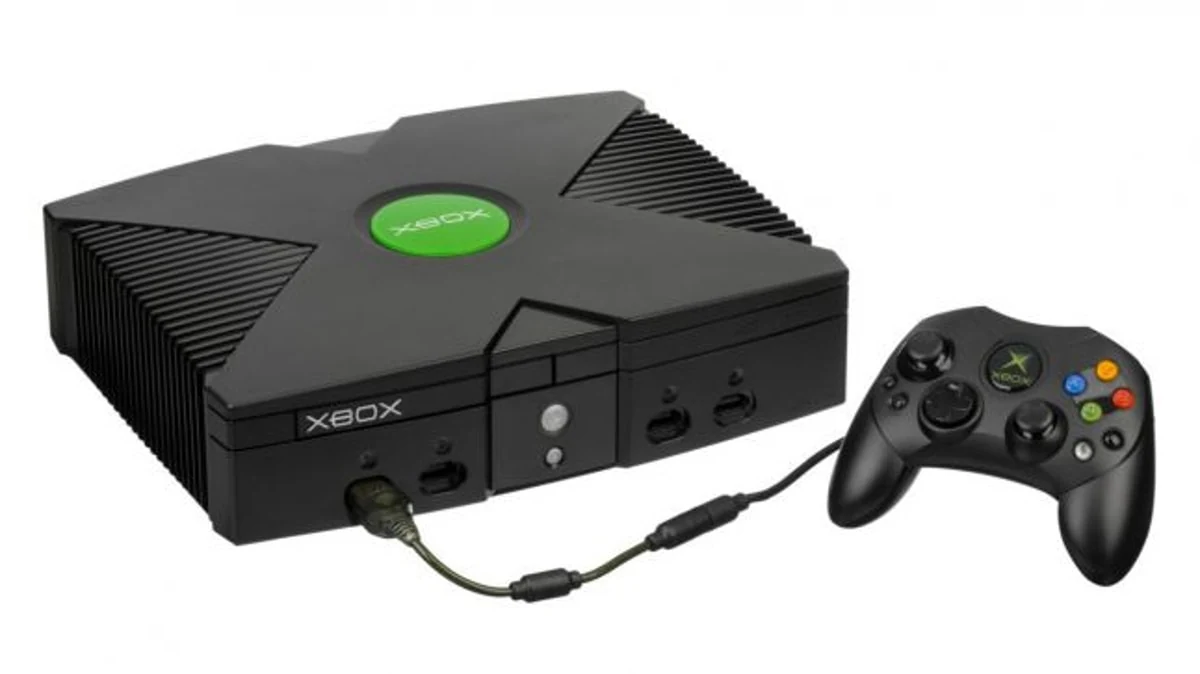
The original Xbox does not disappear into a room. Its top is crossed by a great embossed X; its controller looks built for both hands and then some. Set it beside a television and it announces itself before the screen lights up. For a Northwest player, there is another way to look at that familiar black box: as the end of a long argument that began close to home.
The argument was about what Microsoft could become. A company identified with Windows and office software was preparing to sell a dedicated machine for the living room. That meant earning a place among established console makers, giving developers a reason to build for it, and persuading players that the games inside mattered more than the company name on the carton.
A proposal before a product
In the late 1990s, Otto Berkes, Ted Hase, Seamus Blackley and Kevin Bachus were discussing a different future for games at Microsoft. Their work grew out of the PC gaming world and DirectX, the technology that helped Windows games communicate with graphics, sound and other hardware. The early discussions were unofficial; this was not yet an established console division following an approved plan.
Rusel DeMaria’s interviews with the participants place some of those meetings in Building 4 on Microsoft’s campus, near the pond nicknamed Lake Bill. Software architect Nat Brown joined the conversations as the idea developed. The proposal itself changed along the way: an early vision of standards for gaming PCs evolved toward a machine Microsoft would put its own name behind.

That beginning matters because a finished console can make its existence seem inevitable. It has a shape, a name, a launch date. A proposal has none of that certainty. Someone has to explain why a new box should exist, what it will do better, and why the company should shoulder the expense of making it. The people arguing for Xbox were asking Microsoft to learn a business with unfamiliar rules.
The PC becomes a promise
Bill Gates announced Microsoft’s Xbox plans at the Game Developers Conference on March 10, 2000. The announcement joined familiar PC components and development tools to the promise of a dedicated console. Intel processor technology, a custom NVIDIA graphics chip, a hard drive, four controller ports and broadband connectivity were all part of the public pitch.
Those details described a set of possibilities for game makers. A built-in hard drive offered local storage beyond a removable memory card; an Ethernet connection made networking part of the machine itself. DirectX gave Microsoft a way to talk to developers already familiar with its tools. The company was trying to turn its experience with computers into a reason to trust a console.
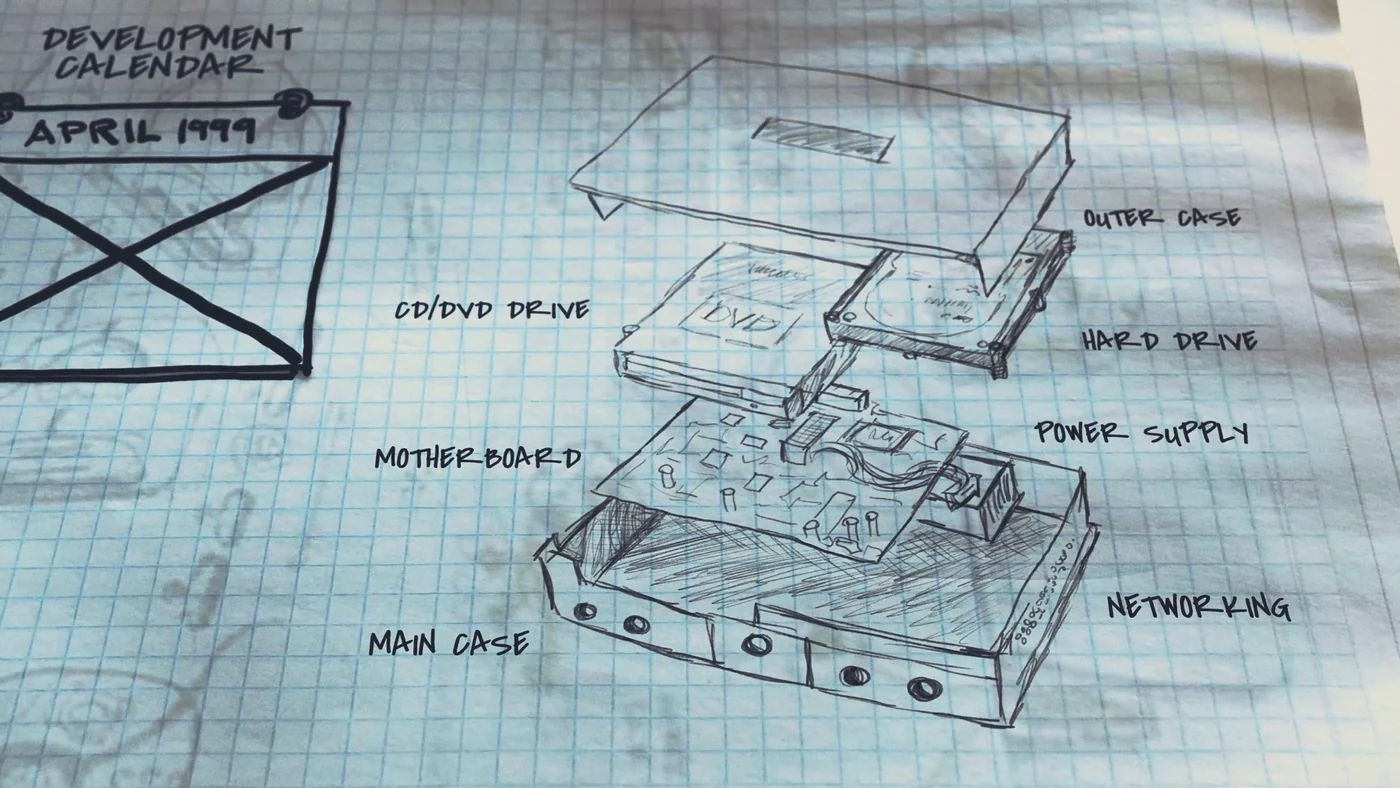
Microsoft’s later account of the project describes competing approaches inside the company and the challenge of making Xbox credible outside it. That is the interesting tension in this local story: the backing of a giant corporation did not remove the need to persuade people. It gave the team resources, but the decisions still had consequences for cost, design, and the audience the machine hoped to reach.
A giant X, then a game
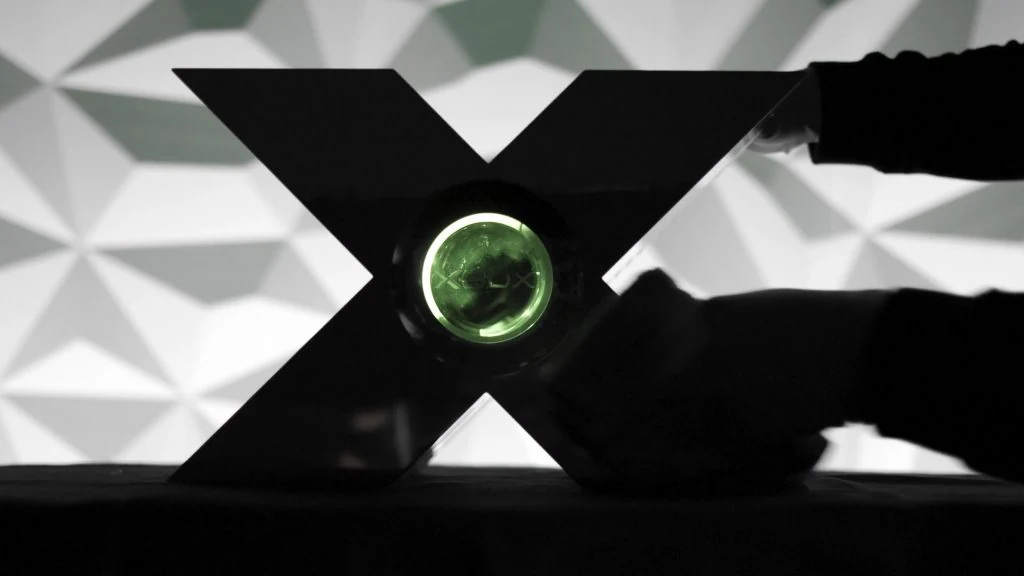
The polished prototype makes an almost literal announcement: here is an X, made into an object. The retail machine is more practical, with a disc tray and ports on its front. Looking from one to the other reveals a useful distinction. A showpiece can express ambition in a single glance. The product must survive the daily routines of plugging in, loading a game, and handing another controller to a friend.
A striking enclosure could get attention; the software had to keep it. On June 19, 2000, Microsoft announced its acquisition of Chicago-based Bungie, gaining publishing and distribution rights to selected Bungie projects, including Halo. The announcement put Bungie inside Microsoft’s games division while promising that the studio would retain its character.
Halo belongs in the Xbox origin story because a platform is experienced through its games. Players encounter movement, sound, scenery and the rhythm of a fight before they encounter an organization chart. Whatever the hardware team intended, it would become meaningful when someone sat down, picked up the controller, and found a reason to keep playing.
November brings the box home
Xbox reached North American stores on November 15, 2001. Microsoft’s launch announcement named Halo among the games available that week and set the console’s estimated retail price at $299.99. The plan that had needed meetings and prototypes was now a carton a customer could carry out of a shop.
There is a large distance between those two moments. In a 2014 Computer History Museum panel, Xbox veterans described the original program as a learning experience in hardware, customer relationships and partnerships. Building tools for other companies and becoming a console platform holder demanded different kinds of work. The first Xbox taught lessons that would shape the next generation.
Another piece of the original design became visible a year after launch. Xbox Live arrived in North America on November 15, 2002, with a subscription starter kit and voice headset. A gamertag, friends list and matchmaking helped turn the network connection into an organized place to meet. The Ethernet port had shipped before the service it would help support.
The Northwest connection is strongest when we follow that chain of work: campus conversations, a proposal, a public commitment, hardware development, games, and finally people playing together. Xbox was designed through a web of companies and manufactured beyond Washington. Redmond’s part was the place where Microsoft’s console idea gathered a team and became a commitment.
Years later, a black Xbox on a shelf can look like a period object. For someone who spent an evening with it, the associations are more immediate: a controller cable stretched across the carpet, a friend asking for another round, the television still on after dark. A local development story ended up inside millions of ordinary rooms. This issue starts with one of those rooms, and follows the box back home.