
VIDEO GAMES · Robot dreams
Asheron’s Call: When Dereth Felt Like Home
In Asheron’s Call’s early years, friendships, strange winters and a notorious item scam made Dereth memorable. One server even tried to protect it from the plot.
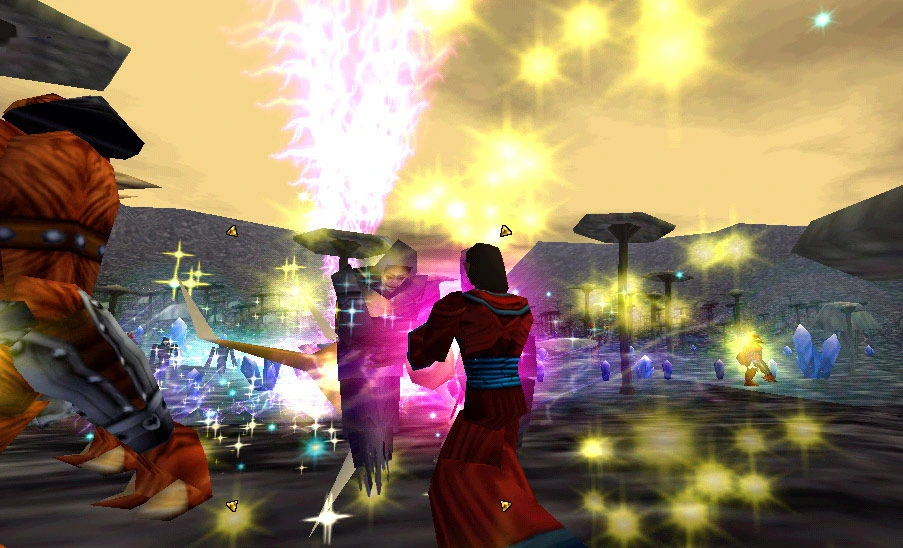
In November 2000, players on Asheron’s Call’s Thistledown server organized shifts to guard a crystal. Breaking it would help release Bael’Zharon, the game’s great imprisoned enemy. They intended to keep him locked up.
It was an awkward development for an adventure with a continuing storyline. The people living inside it had developed opinions about what should happen next. Give players a world worth caring about, it turns out, and they may start protecting it from the plot.
That makes a useful starting point for remembering Asheron’s Call during its early years. There were monsters to fight and numbers to improve, certainly. But the more interesting question was what happened when those activities gave thousands of people reasons to return to the same place, recognize the same names, and take responsibility for something together.
A world with room to learn
Released in 1999, Asheron’s Call entered an online role-playing market already occupied by Ultima Online and EverQuest. Its developer, Turbine, had begun the project in Massachusetts. Lead designer Toby Ragaini later described a small team working out of a house, building an ambitious shared fantasy world before any of its senior developers had shipped a retail PC game.
The Northwest connection was practical and substantial. Microsoft became Turbine’s publisher and supplied the service side through its Gaming Zone: billing, server operations and testing responsibilities. Turbine created the game; Microsoft helped keep the place open. That division mattered for a product whose customers expected the world to continue operating after they had installed the software.
By August 1999, Microsoft was promoting a game built around an evolving story, cooperation, elaborate magic and a landscape stretching from glaciers to deserts. The pitch treated the other people as part of the attraction. A box could supply the software, but the population would help determine the experience.
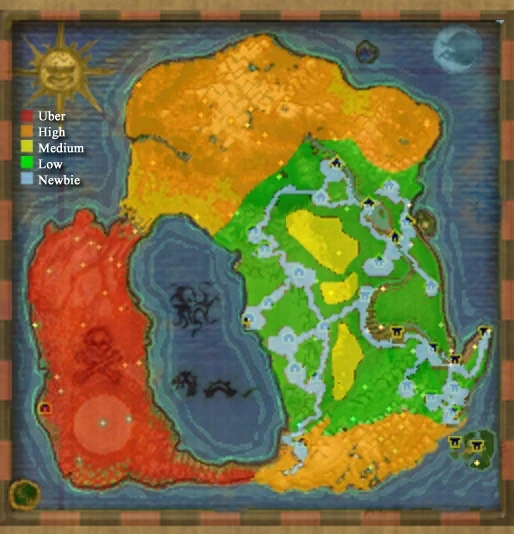
Dereth, the game’s setting, rewarded curiosity. Its outdoor landscape could be crossed continuously, while portals handled other journeys and dungeon entrances. Characters could develop individual skills instead of being confined to a fixed profession. The supplied character types were starting templates: players could adjust them or assemble their own combinations, then spend earned experience on particular abilities.
That gave character building a pleasingly personal quality. Choosing what to improve meant deciding what kind of problems you wanted to solve. An extra capability could be an investment in independence, a contribution to a group, or an experiment that turned out to be less brilliant than it looked on the character screen. The planning was part of the entertainment.
There was room to venture out alone, too. Andrew Park’s contemporary GameSpot review praised the viability of both solo and group play. Death imposed losses and a temporary penalty, with lifestones providing resurrection points, but it did not erase earned experience. Dereth could punish an expedition without making every failed outing feel like starting over.
That balance helps explain the appeal of exploration. A dangerous route becomes more interesting when you can learn it. The first trip is a question; later trips are a kind of competence. Eventually you can explain the journey to somebody else. A landscape becomes familiar through that accumulation of small, useful discoveries.
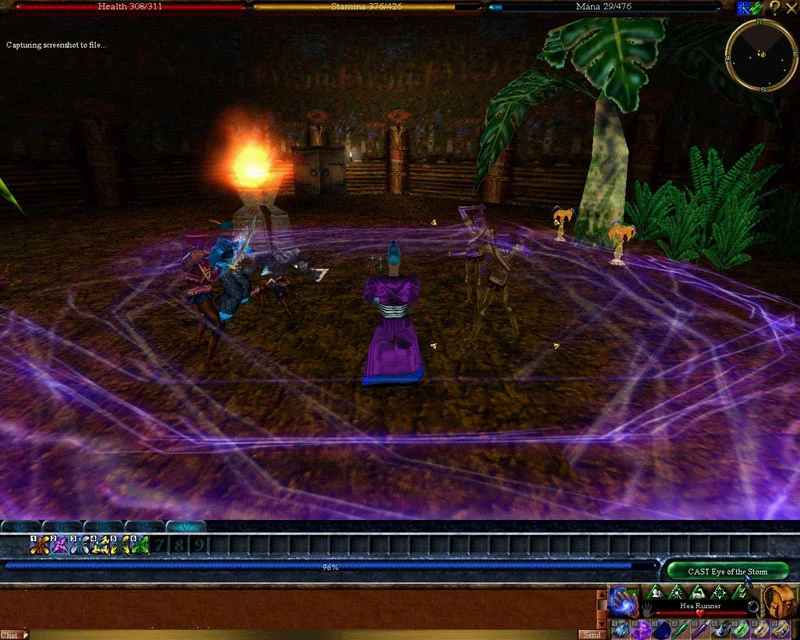
Magic offered another route into learning the world. Early Asheron’s Call treated spells as formulas involving components. Microsoft’s in-world handbook explained the roles of scarabs, herbs, powdered gemstones, alchemical substances and wooden talismans. Colored tapers complicated stronger formulas, and their meanings could vary between spellcasters. Scrolls offered a way to learn a spell without researching it yourself.
There is a particular appeal to a fantasy game that asks a wizard to understand the ingredients. It makes preparation part of the role. The inconvenience is easy to appreciate as well: an evening’s magical ambitions come with a shopping list. Dereth’s appeal included systems that rewarded attention, even when that attention involved checking supplies instead of casting anything spectacular.
The people who made it familiar
Its social arrangements made assistance valuable. A fellowship was a temporary adventuring group. An allegiance connected players in a longer hierarchy of vassals and patrons, with a monarch at the top. Experience bonuses moved upward, giving patrons a reason to help the people beneath them succeed. Equipment, protection and advice could make that relationship useful to a newer player.
It was an unusually direct attempt to give mentorship a place in the rules. The arrangement also left room for the familiar difference between somebody who enjoys teaching and somebody who enjoys having followers. A formal connection could open a conversation; it could not guarantee that the person at the other end would be generous, patient or good company.
The relationships attracted study while the game was still young. In a January 2002 Microsoft Research report, Ann-Sophie Axelsson and Tim Regan examined group membership using player surveys and logged observations. Their results indicated that group members interacted with other players more, both online and offline, than players outside groups. That association did not prove that joining an allegiance automatically created friendships, but it showed that the social life extended beyond a decorative guild label.
This is where the idea of an online world starts to become convincing. A familiar name can mean more than a powerful weapon. It might belong to someone who explains a confusing system well, organizes a dependable group, or makes an otherwise routine expedition entertaining. The software supplies ways to meet; repeated encounters supply reasons to remember.
The cost of trusting a stranger
Of course, a world full of helpful strangers also contained people pretending to be helpful. The notorious “press V” trick exploited an early default control that dropped the selected item. A contemporary strategy-guide update described a Ctrl-V variation presented as a free equipment upgrade. The supposed helper could then grab the dropped possession and disappear. Knowing the controls could save more than a trip through the options menu.
The stakes went beyond losing a disposable weapon. A player FAQ from 2000 praised the Great Mattekar coat’s protection and low weight, while describing the white Hoary Mattekar robe as no longer obtainable from its original creature. Such possessions were worth keeping. The same FAQ warned about the V-key deception and reported that the default binding had changed in June 2000.
These stories belong beside the friendships. Trust made cooperation possible, and dishonesty made trust costly. A newcomer needed help learning the world and enough suspicion to judge the person offering it. For an experienced player, passing along a warning could be as useful as passing along equipment.
When the world changed
Turbine also gave those encounters a changing backdrop. December 1999’s Sudden Season event brought an unnatural winter to Dereth. Snow spread into places where players would not normally expect it, enchanted snowmen appeared, and holiday clothing and activities accompanied a larger mystery. The developers’ recap described both the changes everybody could see and deeper adventures reached by stronger, more persistent explorers.
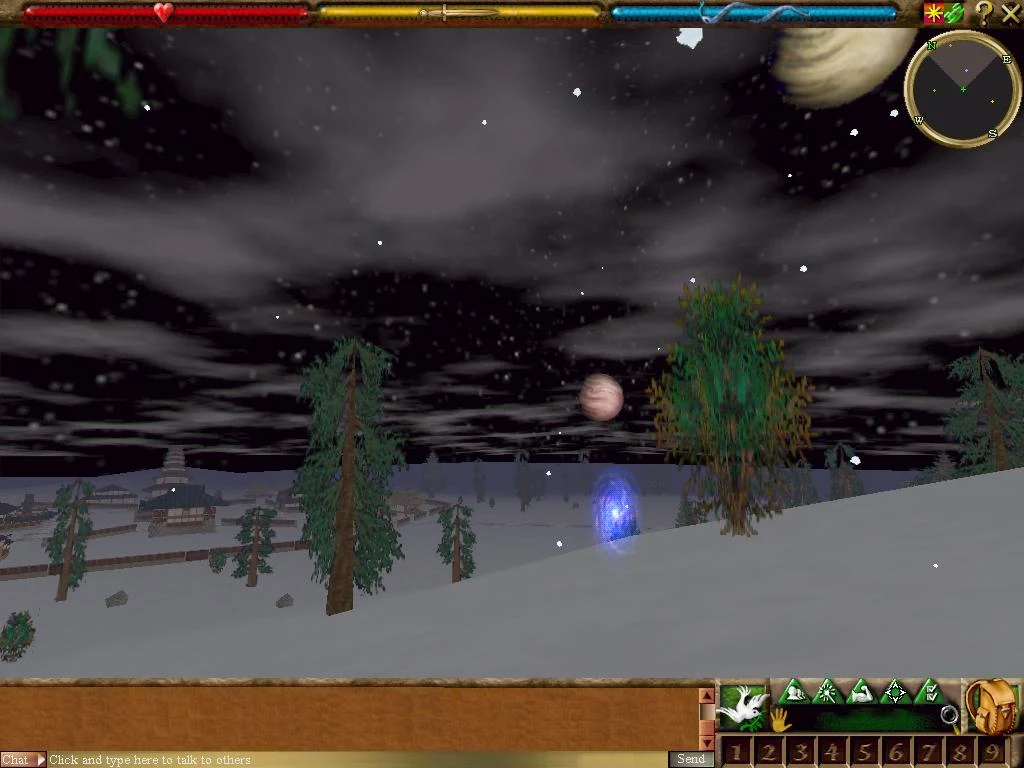
The event’s official material even recorded a cooking competition, naming players who discovered recipes. Among the successful creations were pizza, fruitcake and hot kimchi. It is a wonderfully domestic detail beside the ominous weather and dangerous expeditions: the fantasy population was discovering dinner while other adventurers investigated what had gone wrong with the world.
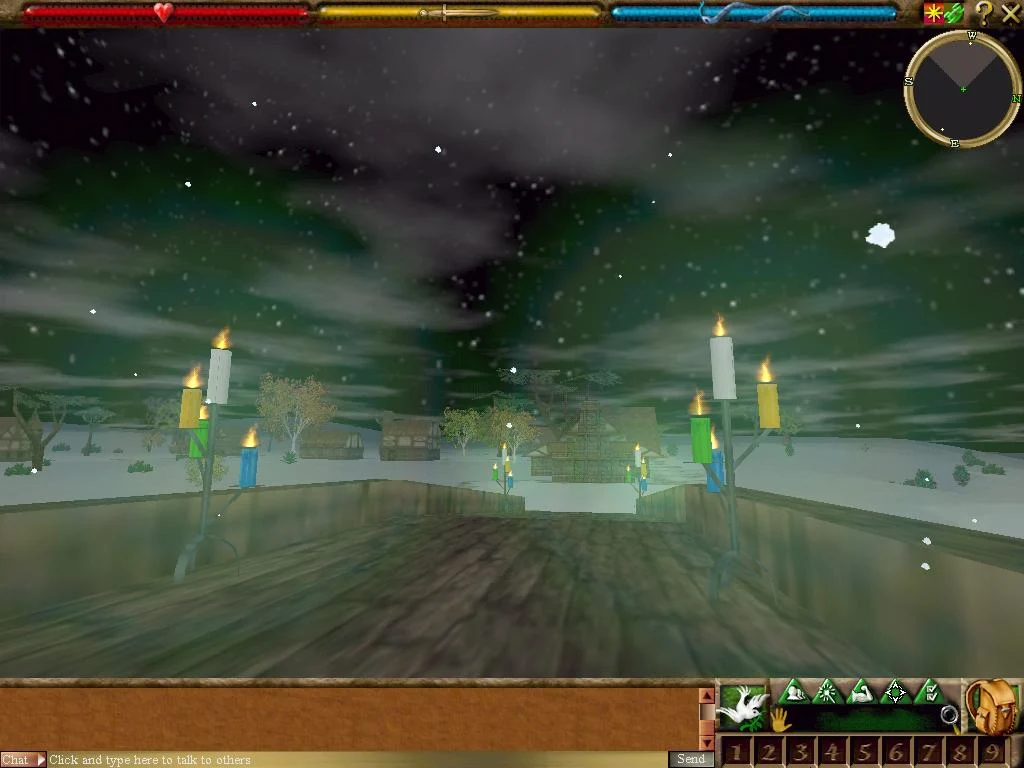
Changes like these gave time a visible presence. Returning to a familiar town could reveal that something had happened. Different players could experience different portions of the same event and still share a reference point. You did not need to complete the hardest encounter to have lived through the strange winter. That distinction gave the wider population a place in the story.
The players who guarded the plot
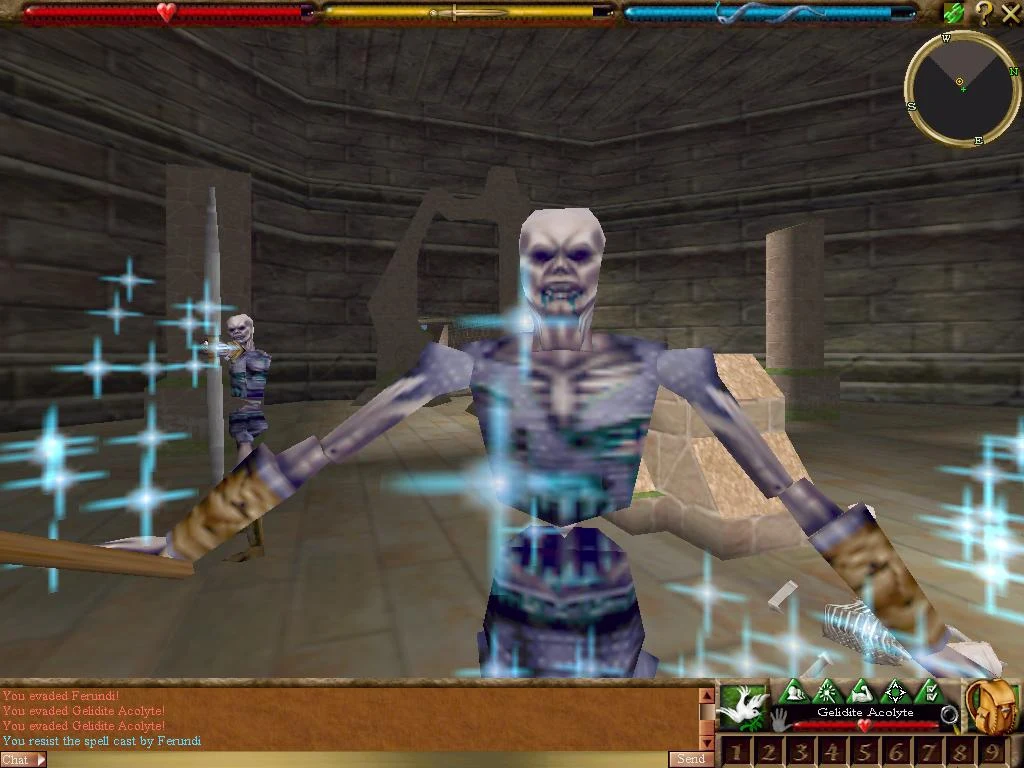
The following year’s Thistledown defense pushed participation further. In his December 8, 2000 account, producer Nik Davidson described around-the-clock player organization, alongside bugs that unexpectedly strengthened the crystal’s position. Turbine wanted Bael’Zharon free on every world for December’s story. Staff therefore intervened through administrator-controlled characters, and the crystal eventually fell. Davidson acknowledged the messy result, credited the defenders with having won, and promised a monument.
The tension is the interesting part. The players had been offered a choice that the ongoing production could not fully accommodate. Their success exposed a limit to the promise of a responsive world. It also produced a far better story than an uncomplicated victory would have: a community had organized effectively enough to force the people running the game to respond.
Read that episode as a disagreement about authorship. The developers needed to deliver another chapter. The defenders had already found a compelling chapter of their own. Neither the technical problems nor the imposed ending makes their organization imaginary. The effort belonged to the players, even when control of the final outcome remained elsewhere.
Somewhere to stay
By late 2001, Dark Majesty supplied a quieter expression of attachment: houses. The expansion added the island of Marae Lassel and player-owned homes with space for belongings and gatherings. Large mansions were intended for organized groups. GameSpot reported roughly a thousand houses per server at launch, made available gradually. The package also included the original game and a month of play for a reported US retail price of $20.
Housing gave an adventure game another sort of destination. A home could turn accumulated possessions into a display and a meeting place into something a group regarded as its own. It also changed what a successful evening might look like. Sometimes the appealing prospect was simply getting people together somewhere they wanted to stay.
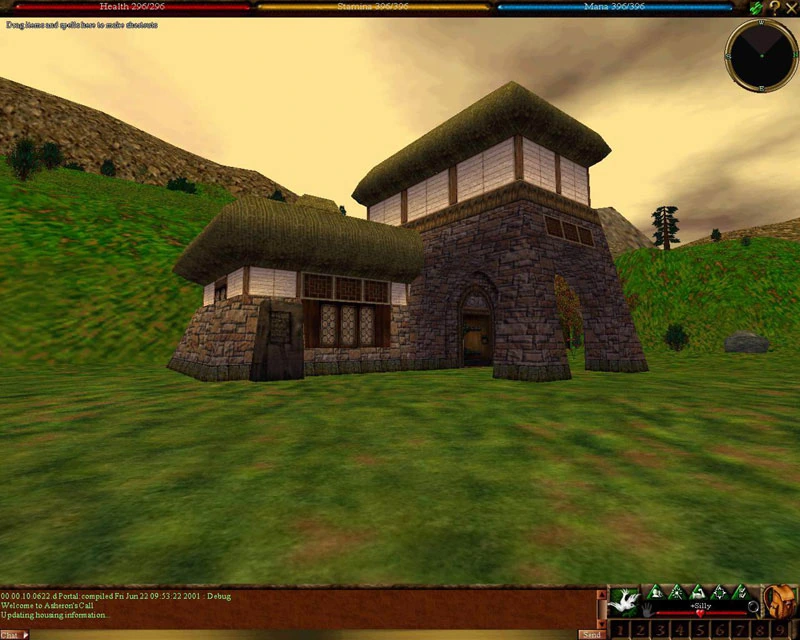
Scarcity complicated that promise. A player review published in December 2001 complained about people waiting at unopened properties, resale prices and limited storage. It was one player’s sharply critical account, rather than a census of everyone’s experience, but it catches a recognizable problem: announcing houses was easier than making sure everybody who wanted a home could obtain one.
Contemporary criticism also keeps the wider picture honest. Park’s Dark Majesty review found the interface crowded and the visuals increasingly dated beside newer rivals, while still valuing the character development and quantity of adventure. The game’s appeal did not require every system to be elegant. It required enough worthwhile possibilities to make returning feel rewarding.
The early years are more revealing when remembered with those frustrations intact. Experimenting with a character could mean making an awkward choice. A social hierarchy could encourage kindness or self-interest. A changing world could surprise its inhabitants and disappoint them when their choices reached its limits. Those tensions were part of what people were learning to negotiate together.
Asheron’s Call’s strongest promise was that the next visit might matter in a different way. There could be a new place to investigate, a useful skill to develop, or somebody worth spending time with. Familiarity made the changes meaningful; change kept familiarity from becoming the whole experience.
Thistledown makes that promise unusually tangible. A crystal was something the game could replace or remove. The decision to stand watch over it came from the people who had made Dereth part of their lives. They found a reason to show up for one another. For a world reached through a computer screen, that was a considerable achievement.