
MADE IN THE NORTHWEST · Robot dreams
720 Poses for 30 Seconds: The California Raisins Were Built in Portland
A Portland newspaper dateline, a studio figure and a storyboard marked FCB/CALRAB reveal the work behind the California Raisins’ dancing gloves and sneakers.
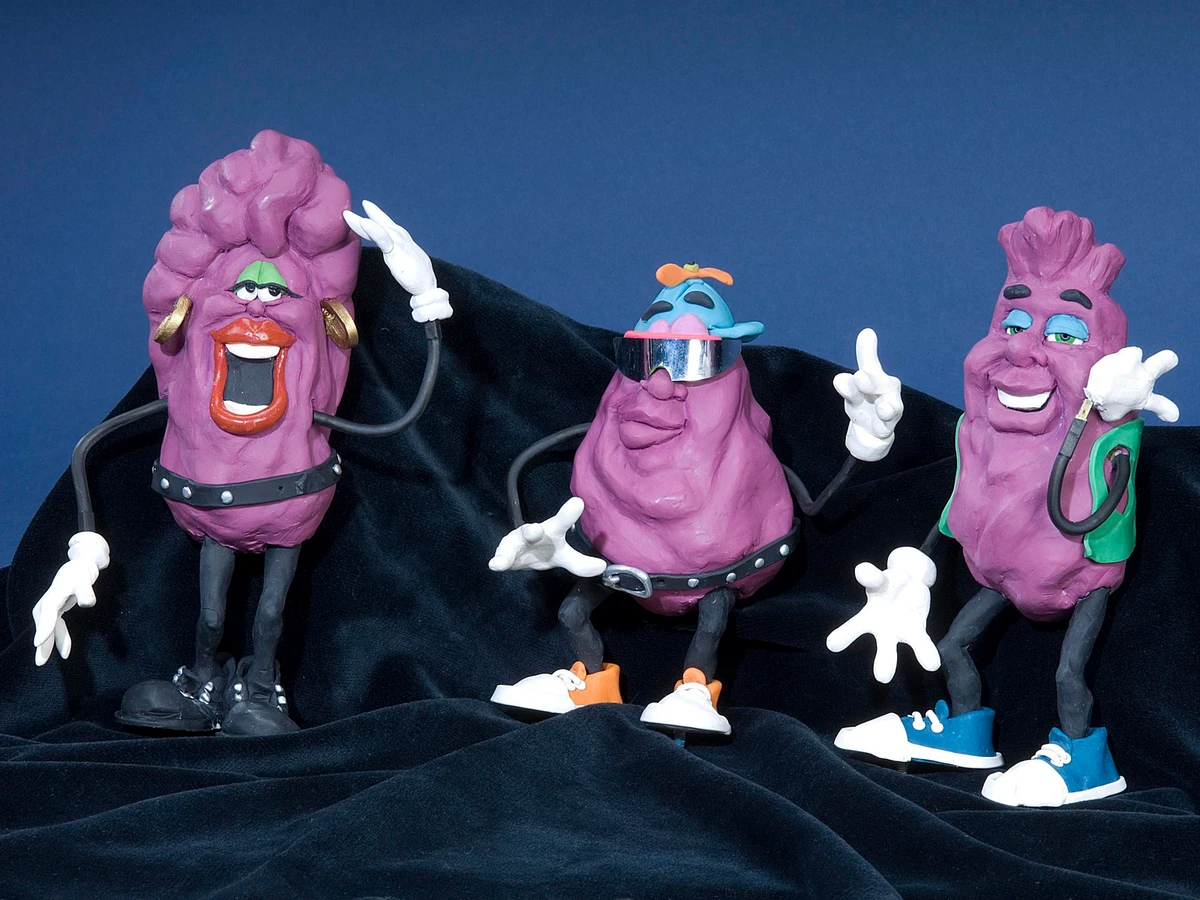
Monday, Dec. 21, 1987 · 8:30 p.m. · CBS A Claymation Christmas Celebration
That was the listing. The newspaper preview that ran ahead of it, in The Washington Post in December 1987, carried a Portland, Ore., dateline, because that is where the special was made. Will Vinton's clay figures, the preview said, had "first turned up as dancing California raisins," then as Dave and Maddie on Moonlighting, and now they were getting a Christmas special of their own: the Raisins, two dinosaur movie critics and a pair of walruses doing an ice ballet.
The Raisins were the famous ones. The address was Oregon.
The arithmetic
The preview let the studio explain its method. Chris Werner of Will Vinton Productions said the clay figures are repositioned 24 times for every second of film, which the preview worked out to 720 separate shots for a 30-second commercial. A commercial took six to eight weeks to shoot. The Christmas special took about six months. The whole firm, the preview reported, had a staff of 55.
Run the numbers yourself: 30 seconds times 24 frames. Every head tilt and glove flick in a half-minute of "I Heard It Through the Grapevine" was one of 720 small decisions, each followed by a click of the camera.
Three names on one page
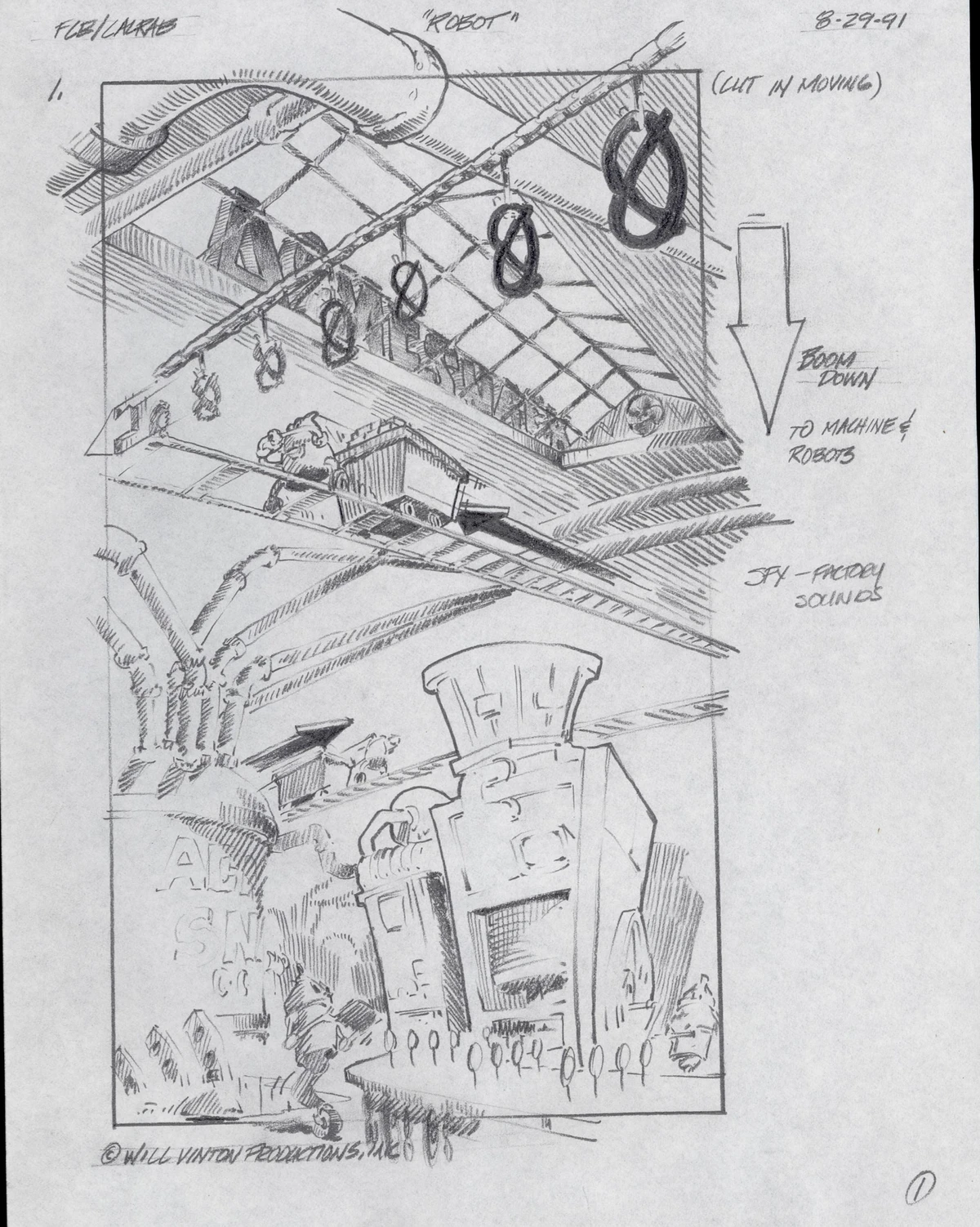
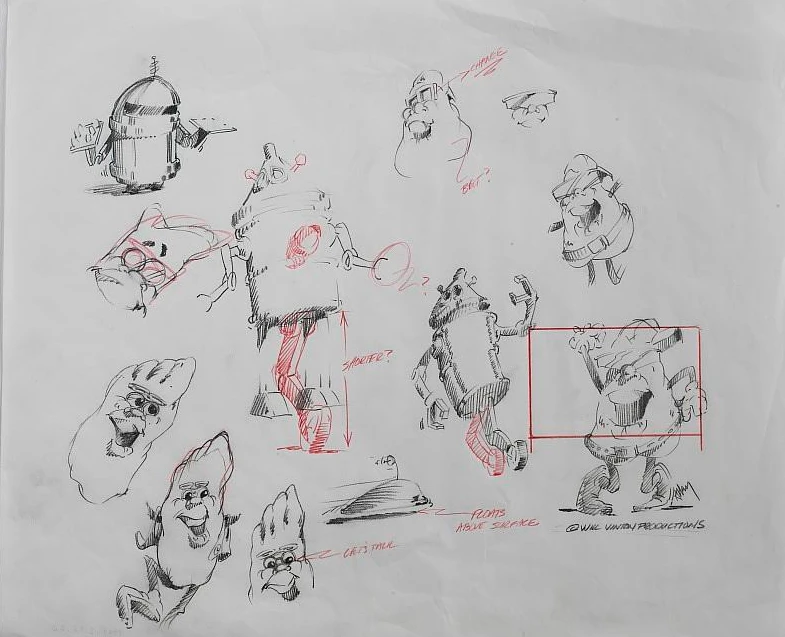
The Smithsonian's National Museum of American History holds sixteen pencil sketches from the campaign. Eleven are storyboard sheets for "The Robot." Its first page is headed FCB/CALRAB, dated 8-29-91, and printed at the bottom with the studio's copyright line.
Those three names are the chain. CALRAB is the California Raisin Advisory Board, the growers' board. FCB is Foote, Cone & Belding, the advertising agency. The drawings were made by the studio in Portland. The Paley Center's record for the commercial "Late Show" credits Seth Werner as copywriter and Will Vinton Productions in Portland as its production company. The industry's own history says Buddy Miles sang the soundtrack and that developing and testing the first animated 30-second spot cost $300,000.
Look at the date again. The industry's history dates the first commercial's debut to 1986. By August 1991, the growers' board, agency and Portland studio were still planning new spots.
What the museum kept
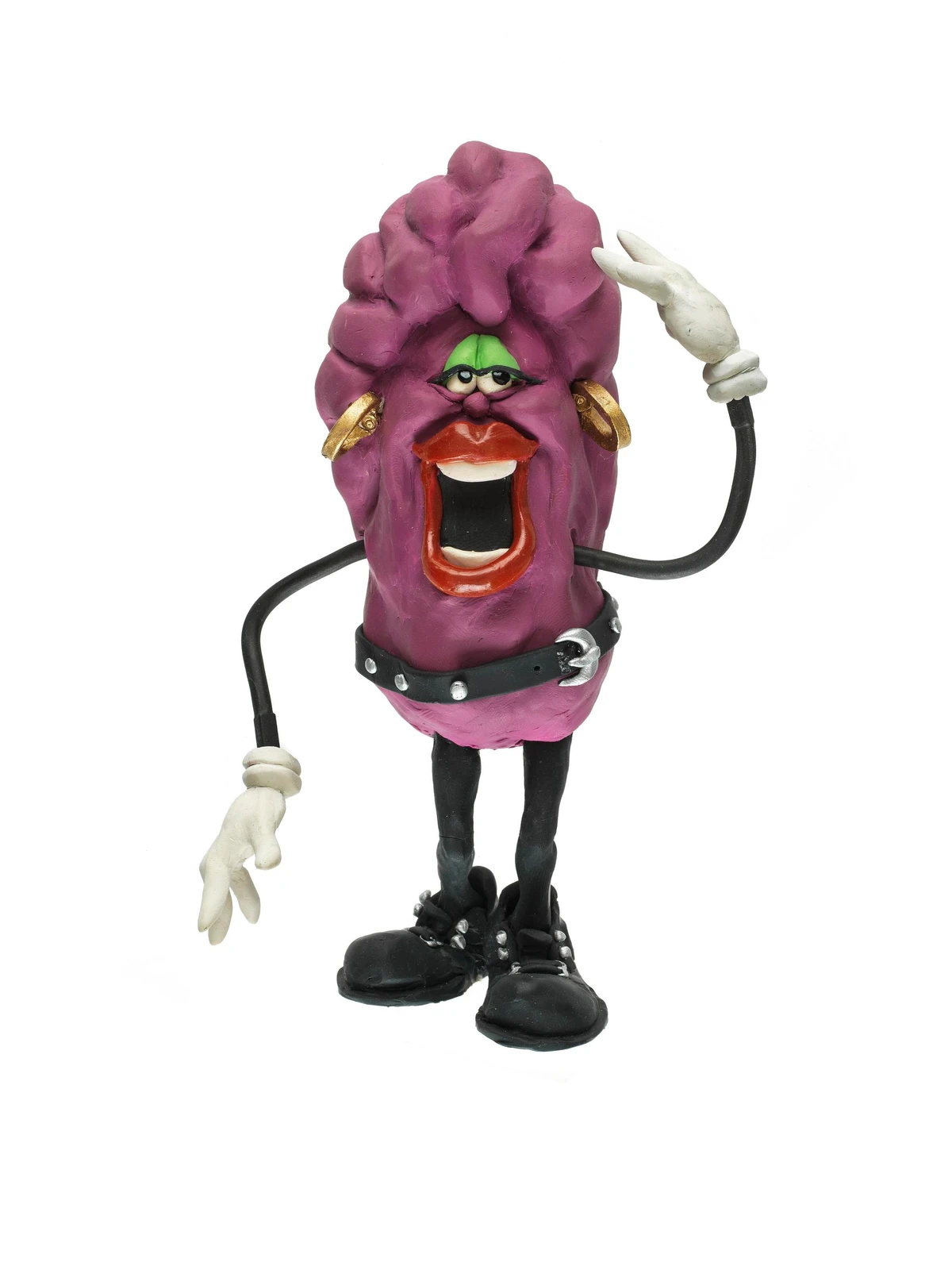
The museum's catalog entry for one of the figures says it was made by Will Vinton Productions in Portland between 1986 and 1991. It stands about 22 centimeters, a little under nine inches, and the materials list reads: clay, plasticene, lead, wood.
The entry is also blunt about the joke. The figures, it says, were "based on caricatures of African American rhythm-and-blues groups." That is the museum's wording, and it is worth holding next to the craft: the sunglasses and the swagger were built on a real musical tradition, performed to a song made famous by Marvin Gaye.
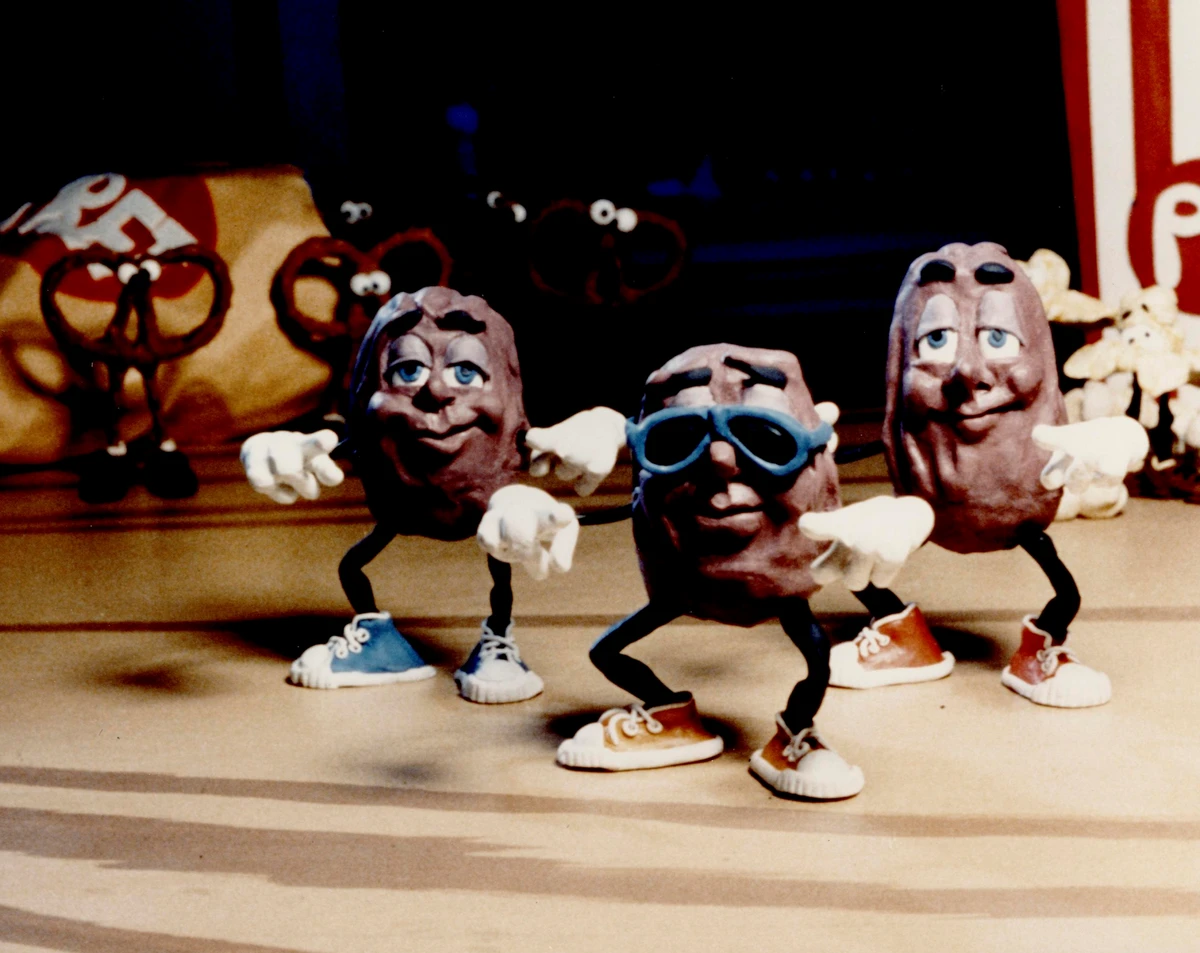
The characters left the studio
The pose-by-pose figures were studio equipment. The faces and gloves could travel much farther. On licensed merchandise, a performance became a picture you could take to school.
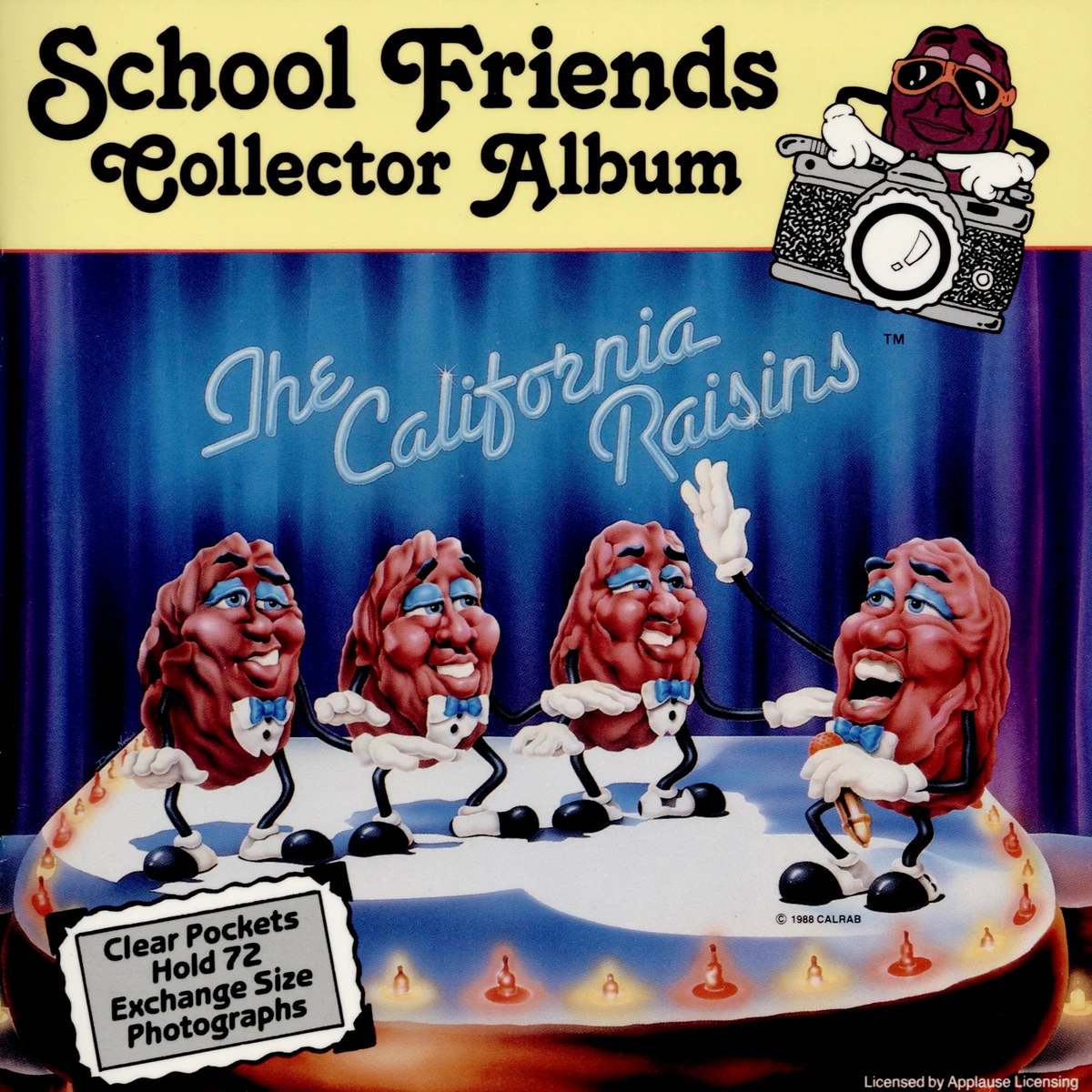
The Smithsonian also keeps a School Friends Collector Album from Antioch Publishing of Yellow Springs, Ohio. Its cover promises "Clear Pockets Hold 72 Exchange Size Photographs," and it carries a copyright line for the growers' board itself. A commodity group was now licensing school supplies. Seventy-two pockets is a tenth of a single commercial's shots.
The credits
The Christmas special won the 1988 Emmy for Outstanding Animated Program, credited to David Altschul, Ralph Liddle and Will Vinton. Vinton had already won an Oscar, with Bob Gardiner, for the short "Closed Mondays" at the 47th Academy Awards on April 8, 1975. The original Raisins campaign was retired in 1994.
Next time one of those old spots comes on, count the seconds and multiply by 24.