TOYS & IMAGINATION · Robot dreams
Popy: The company that put weight behind robot dreams
How a Japanese toymaker brought screen heroes into children’s hands through metal, mechanisms and imaginative engineering.
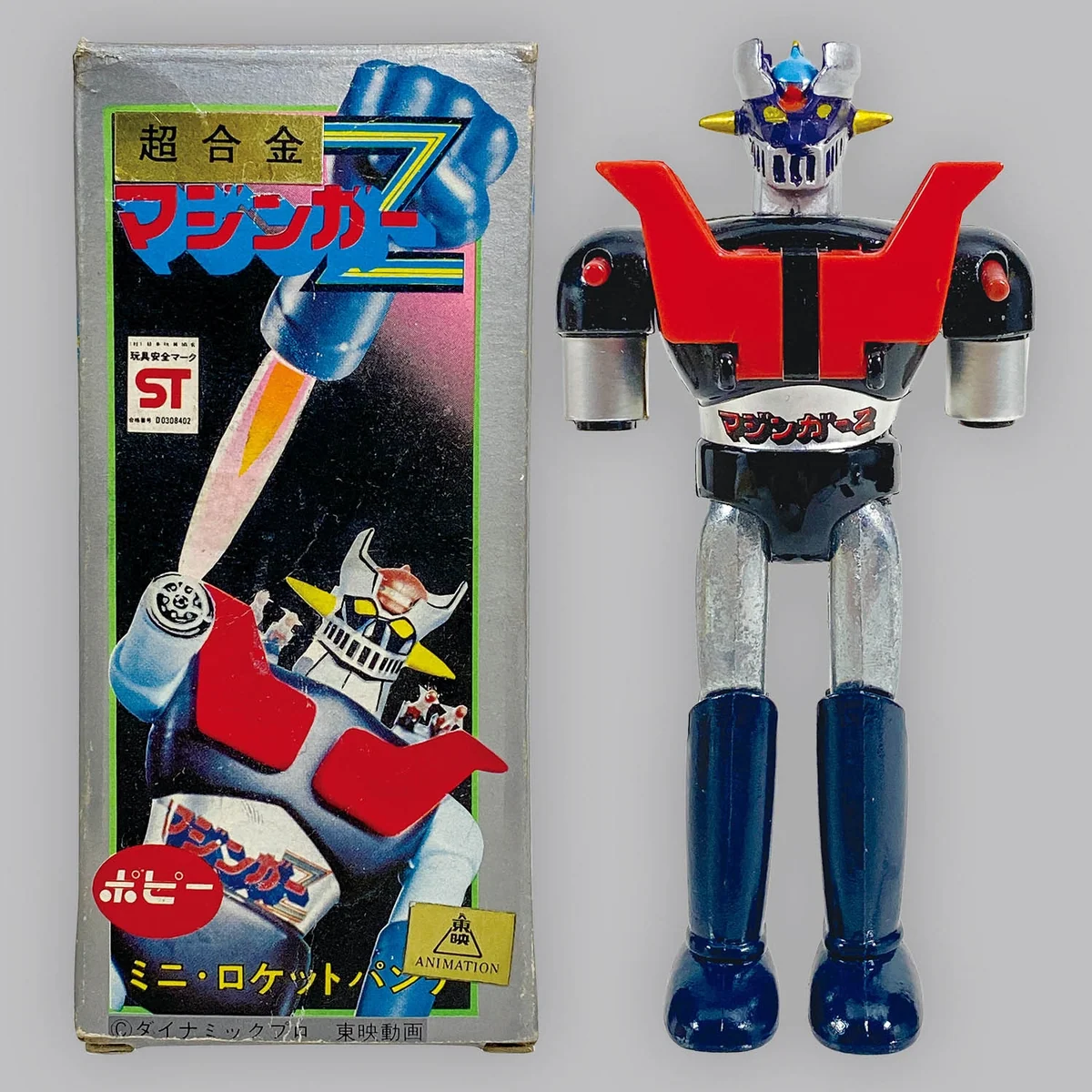
Some toys make their strongest impression before you move a single joint. There is the weight in your hand, the coolness of metal, and the feeling that a machine from television has somehow become a real object. That is a useful place to begin the story of Popy.
Popy was a Japanese toy company, not an individual designer. Bandai established it in July 1971 to specialize in character toys. Its story brings together the people who imagined screen heroes and the people who worked out how children could play with them.
A character you could become
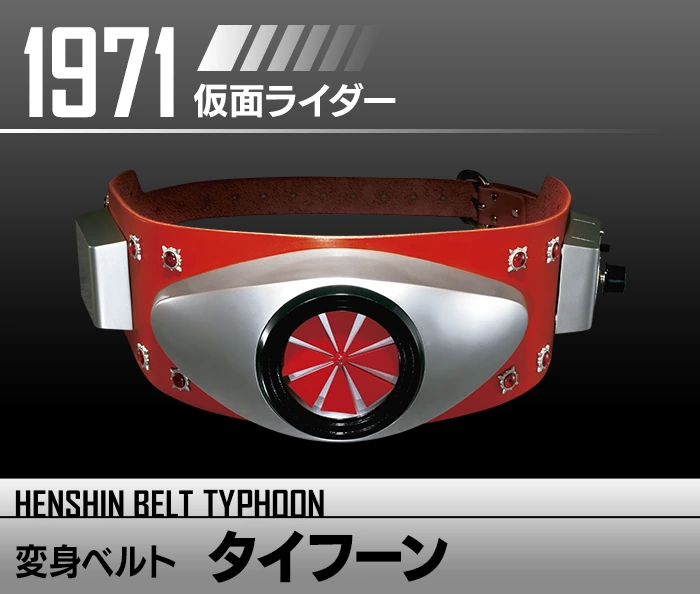
Popy's idea of character play was never limited to robots. Bandai's own product history lists a Kamen Rider transformation belt in 1971, the year Popy was established. The original Typhoon belt put a spinning, lit windmill at a child's waist. A television hero's transformation could now begin with a real gesture in the living room.
The scale could change just as dramatically. Bandai records that Jumbo Machinder Mazinger Z won the Grand Prix at the 1973 International Trade Fair Toy Concours. The towering figure and the later hand-sized Chogokin toy offered different ways to meet the same hero: one was a presence in the room, the other an object with surprising heft in the hand.
Making a fictional metal feel real
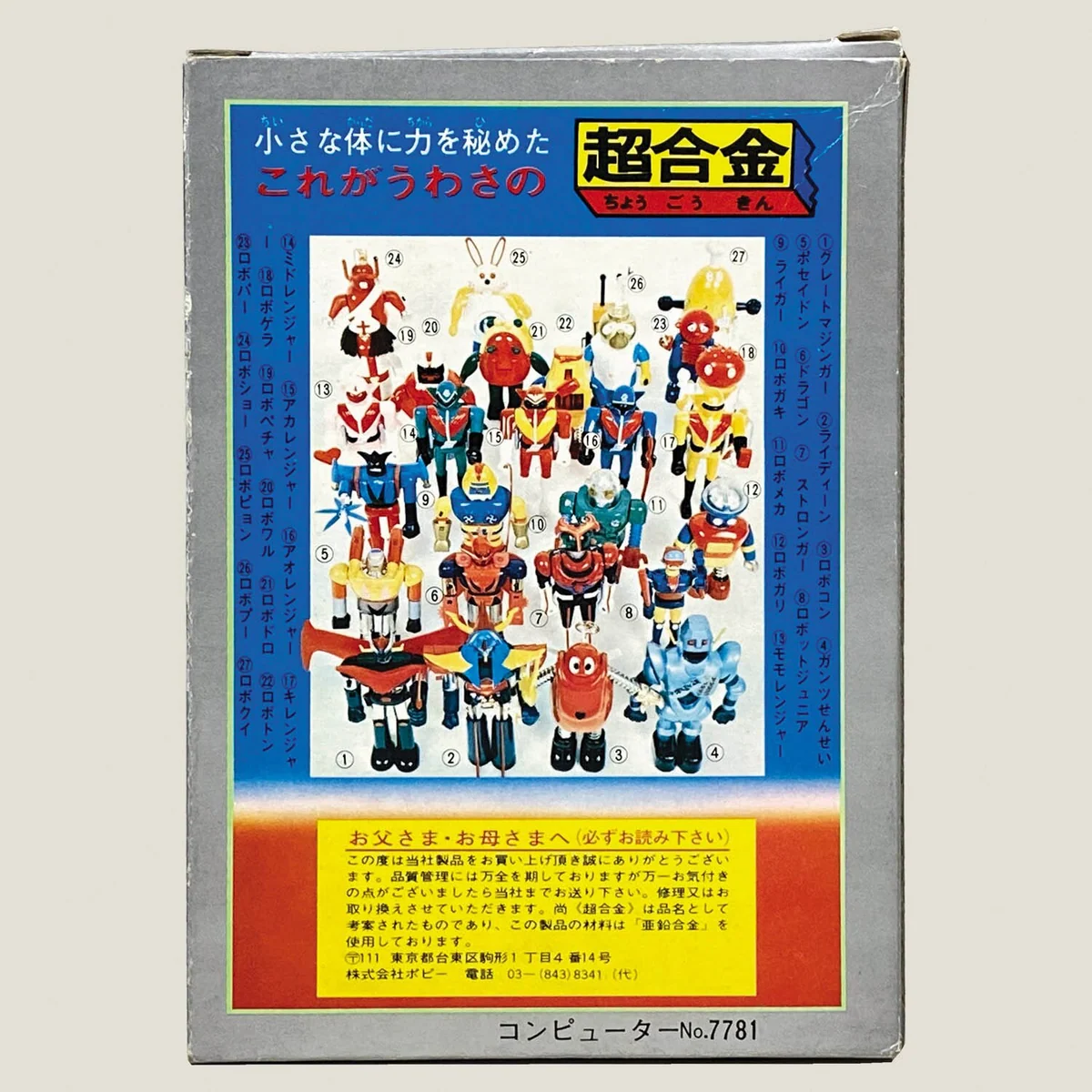
In February 1974, Chogokin Mazinger Z helped give that ambition a physical form. The name came from Chogokin Z, the fictional material used to build Mazinger Z in the animated series. The toy’s real-world answer was die-cast metal, primarily zinc alloy.
The material became part of the experience. Weight and a metallic surface could suggest the machinery of a giant robot even when the toy was small enough to hold. Popy’s achievement is worth considering as a design choice: the object could communicate something about its character through touch as well as appearance.
That contrast helps explain why the material mattered. The fictional Chogokin Z was impossibly strong; the toy did not need to reproduce it literally. Die-cast zinc gave the small figure a convincing weight and a cool surface. This was storytelling through an ordinary physical sensation, before a child even pressed a button.
The people behind the mechanisms
Materials were only part of the appeal. The early Mazinger Z Chogokin also offered a spring-loaded rocket punch. A familiar action from the screen became something a child could set off.
Transformation presented a harder problem. Animation can make shapes change in ways that a manufactured object cannot. A toy has to find somewhere for every part to go.
An animation-history guide commissioned by Japan’s Agency for Cultural Affairs identifies industrial designer Katsushi Murakami as a central figure in Popy’s success. On Raideen, he helped ensure that the humanoid robot could physically transform into its God Bird flying form. The guide credits the design collaboratively to Murakami, Studio Nue’s Kazutaka Miyatake and Naoyuki Katoh, and Yoshikazu Yasuhiko.
That collaboration is the revealing part. Toy design could help shape a screen character from the beginning. Seen as a design problem, a transformation becomes a conversation between what looks exciting in a drawing and what can work as an object.
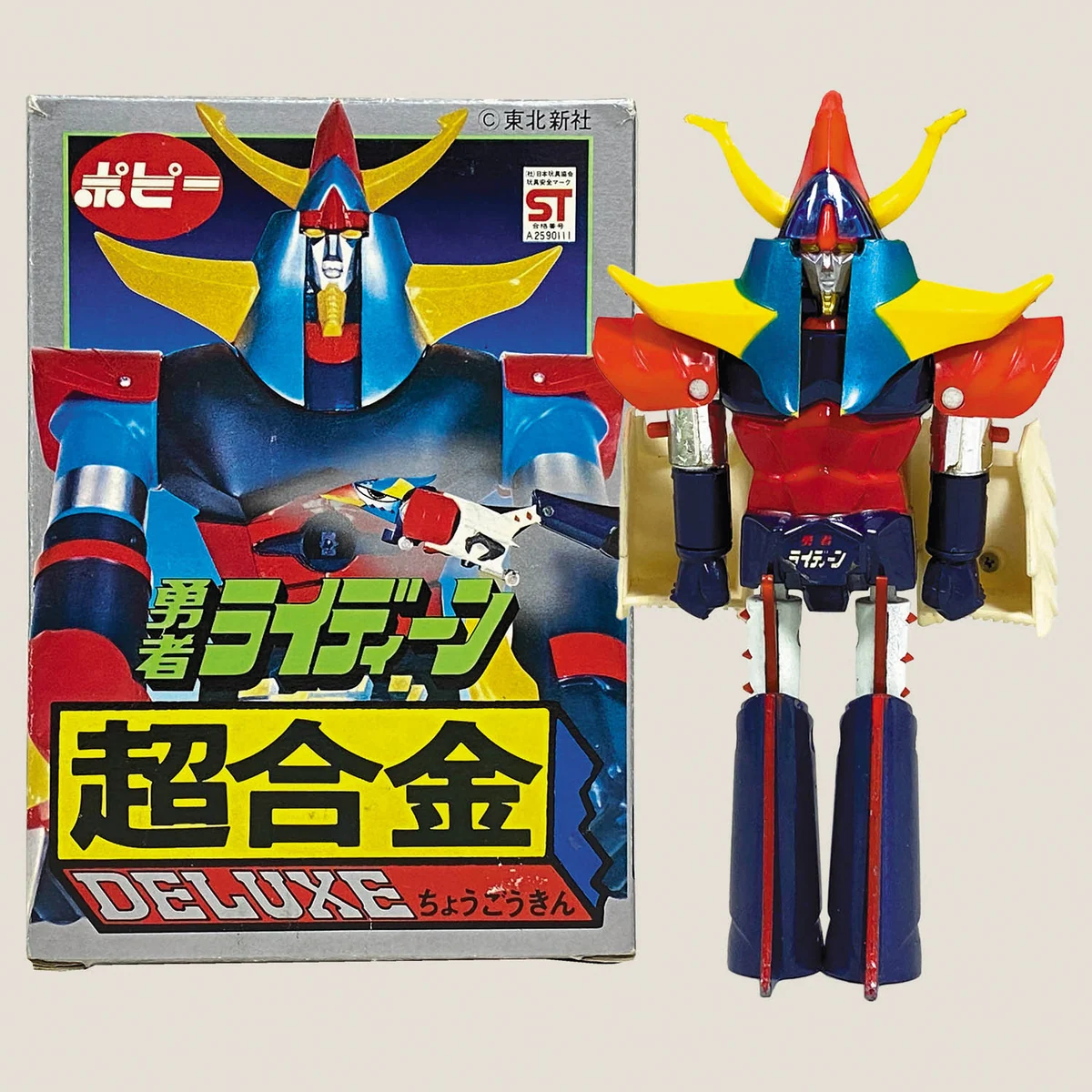
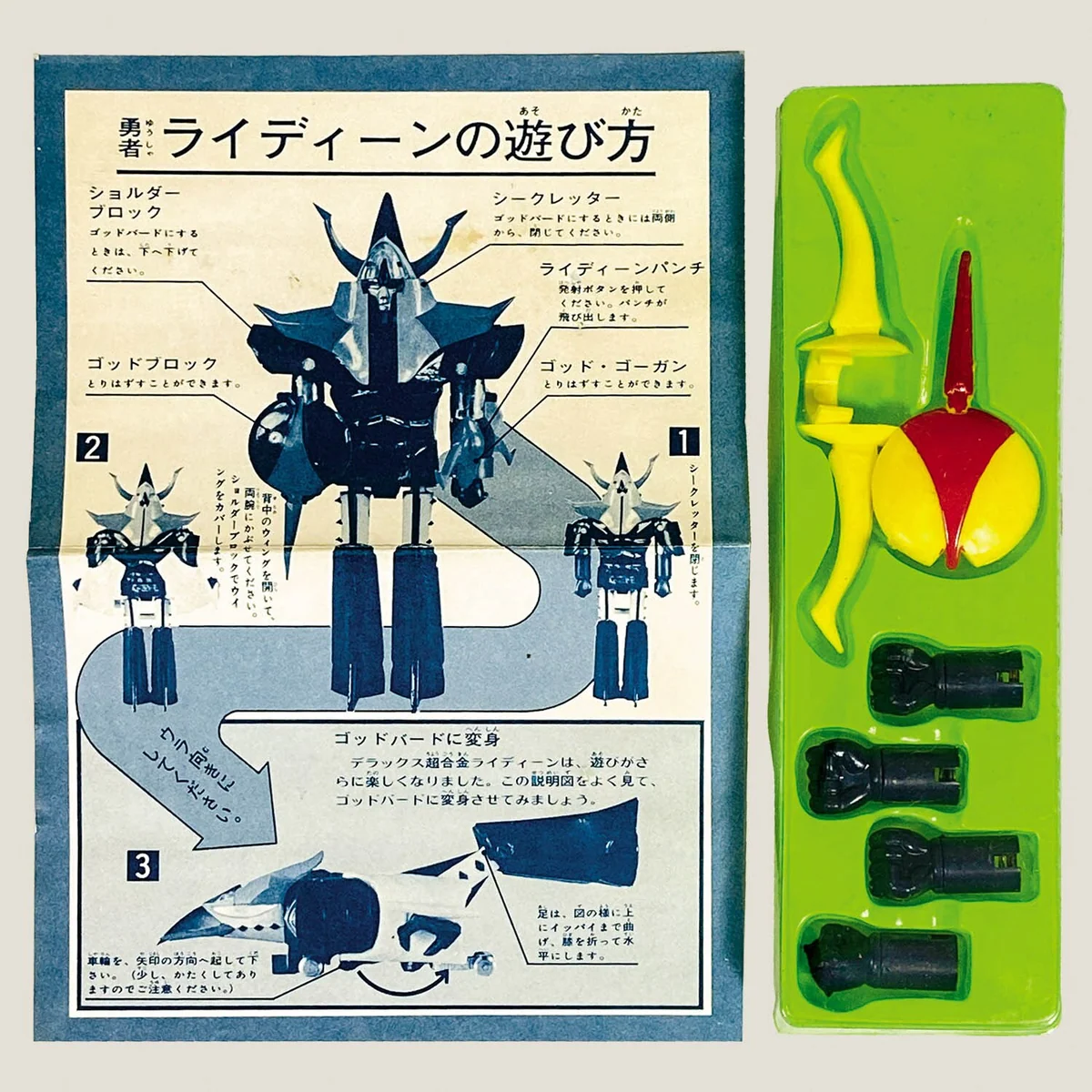
The instructions beside the Raideen toy make the compromise visible. Every wing, leg and joint must occupy a real place in both forms. The Agency for Cultural Affairs' robot-anime history describes Raideen as the work of an industrial designer, science-fiction visualists and a character designer together. Its account treats play value and the screen world as parts of one design, not separate finishing touches.
This is the detail worth looking for in an old toy: where the drawing yields to a hinge, where a part locks, and where an imagined motion becomes something a child can perform. A transformation is memorable partly because it asks the player to complete it.
A journey into American toyboxes
Bandai’s corporate history records exports of Jumbo Machinder toys to Mattel in August 1976, followed by success in 1977 under the Shogun name. It is one concrete example of Japanese robot toys reaching children through a different company and branding.
For a museum, that journey opens another set of questions. What changes when a toy crosses a border? Which names and stories travel with it? What does a child imagine when the robot arrives before the television series does?
Those American releases did not simply carry the Japanese name across the Pacific. Bandai's timeline names Mattel as the importer and Shogun as the successful 1977 label. A new box and name could introduce the machine before a child knew the television story behind it. The object had to invite play on its own terms.
The name changed. The appeal remained.
Popy was absorbed into Bandai in 1983. Chogokin continued, and later lines such as Soul of Chogokin revisited familiar characters with die-cast parts and elaborate action features for collectors.
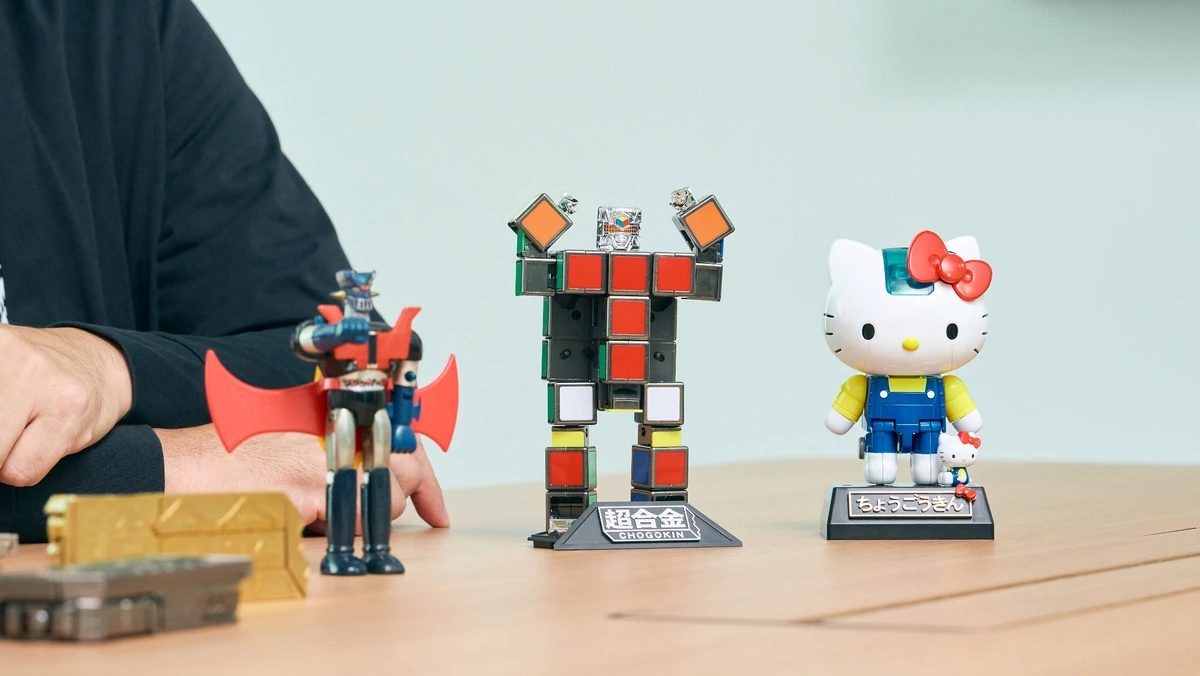
The later collector lines preserve that conversation with the original. Bandai describes Soul of Chogokin as a series built around die-cast parts and character-specific mechanisms. The audience and engineering have changed, yet the central promise is familiar: give an impossible screen machine a form that can be picked up, posed and understood.
At Rewind, this is the kind of history we want to explore: how materials, mechanisms and imagination meet in something made for play. A Popy toy offers more than a recognizable robot. Look closely and there are decisions to discover—where a joint turns, how a part locks, what the weight suggests, and how an impossible machine becomes something a person can understand with their hands.