
CARTOONS & CHARACTERS · Robot dreams
One Saturday, One Cartoon: Cartoon All-Stars to the Rescue
On April 21, 1990, rival cartoon studios and television networks joined an anti-drug special. A free-rental videotape carried the collaboration beyond that Saturday morning.
Michael Hill's broadcast-day newspaper preview began with a five-year-old watching a promotional spot. Daffy Duck, Bugs Bunny, Garfield, the Smurfs and other familiar faces flashed past. “Are all those guys going to be in one show?” the boy asked.
They were. Cartoon All-Stars to the Rescue is remembered for its anti-drug message. As a piece of television history, it is more unusual for what it took to put those characters in the same room.
A committee, a President and a Saturday morning
The project grew out of the Television Academy's campaign against substance abuse. A contemporary Cash Box report names committee chairman John J. Agoglia, an NBC executive, and identifies the intended audience as children aged five to eleven. Familiar cartoon faces were meant to carry a serious message to that audience.
The proposal had a prominent supporter. On March 2, 1990, President George H. W. Bush addressed the Academy in Los Angeles. He invoked an audience of twenty million Saturday-morning cartoon viewers aged five to eleven. That was a number used in his pitch, not a measured audience for the still-unbroadcast special.
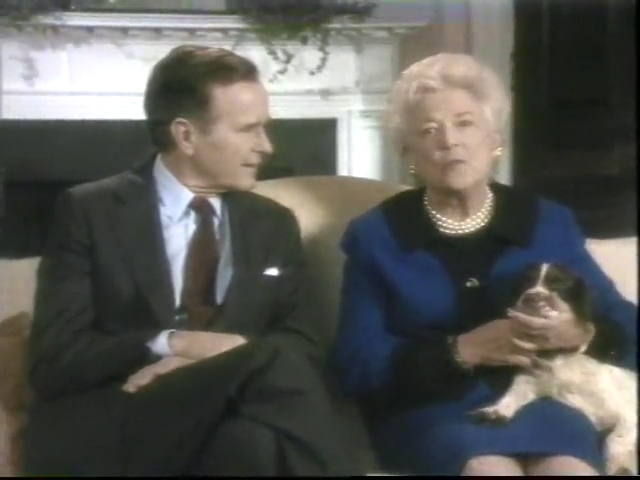
Bush praised the cooperation among the characters' owners. For April 21, he hoped that “every TV set is on and every kid is watching.” The surviving home-video copy opens with the President and Barbara Bush introducing the program. Their appearance belongs to the tape; it is distinct from his earlier hotel speech.
Clearing the dial
ABC, CBS, NBC and Fox were part of the coordinated broadcast plan, alongside cable and independent outlets. Cash Box listed April 21 at 10:30 a.m. Eastern, 9:30 Pacific and Central, and 8:30 Mountain. Its Pacific slot gives Northwest readers a useful period reference: this was a midmorning appointment, not an evening television event.

Those time-zone labels should not be mistaken for one identical instant across North America. Local cable and independent-station slots could differ from the network showing. The period publicity was describing an unusually broad agreement to carry the special, rather than a guarantee that literally every channel showed it together.
The surviving WCGV-TV promo makes the local character of that agreement visible. Famous faces race through the spot before the station's own 9:30 time appears. A viewer's route to the show still passed through a particular channel and schedule.
Who would upstage whom?
Hill described studios insisting on approval of their characters' drawings and dialogue. Rights cooperation did not make their identities interchangeable. Writers Duane Poole and Tom Swale had to accommodate an ensemble whose members normally belonged to separate fictional worlds.
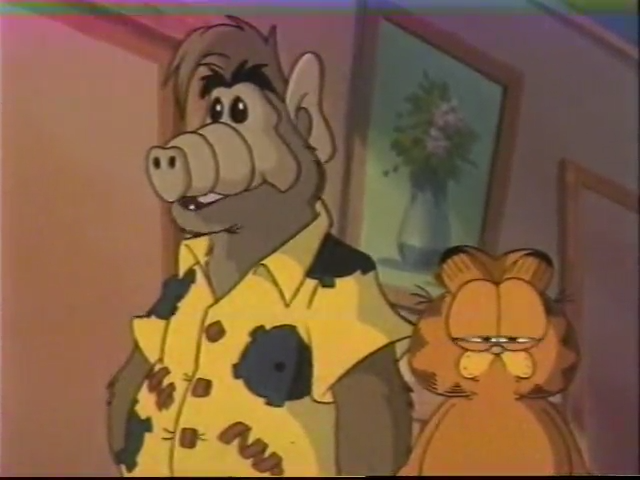
The program turns that separation into its opening device. Cartoon characters emerge from objects around Corey's bedroom: a picture, a television, a toy. They become a little committee of their own. A scene can put ALF beside Garfield without pretending they have always inhabited the same series.
The familiar stars were helpers. The troubled teenager Michael, his younger sister Corey and the villain Smoke supplied the story's new characters. Smoke, voiced by George C. Scott, gave the production an antagonist without asking one studio's famous hero to become another studio's cautionary example.
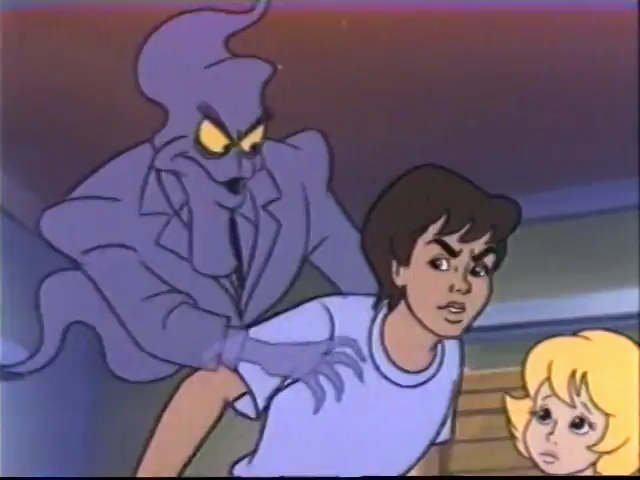
The credits identify Roy Edward Disney as executive producer, Poole and Swale as writers, and Howard Ashman and Alan Menken as the lyricist and composer of Wonderful Ways to Say No. The shared song was another way to give different voices one task. These are on-screen production credits, rather than details carried forward solely from a much later account.
Who paid—and who lent the tape
Hill reported an approximately $650,000 program cost and a contribution of around $2 million once the videotape effort was included. Those are the newspaper's contemporary figures. They describe different parts of the project and should not be collapsed into one animation budget.
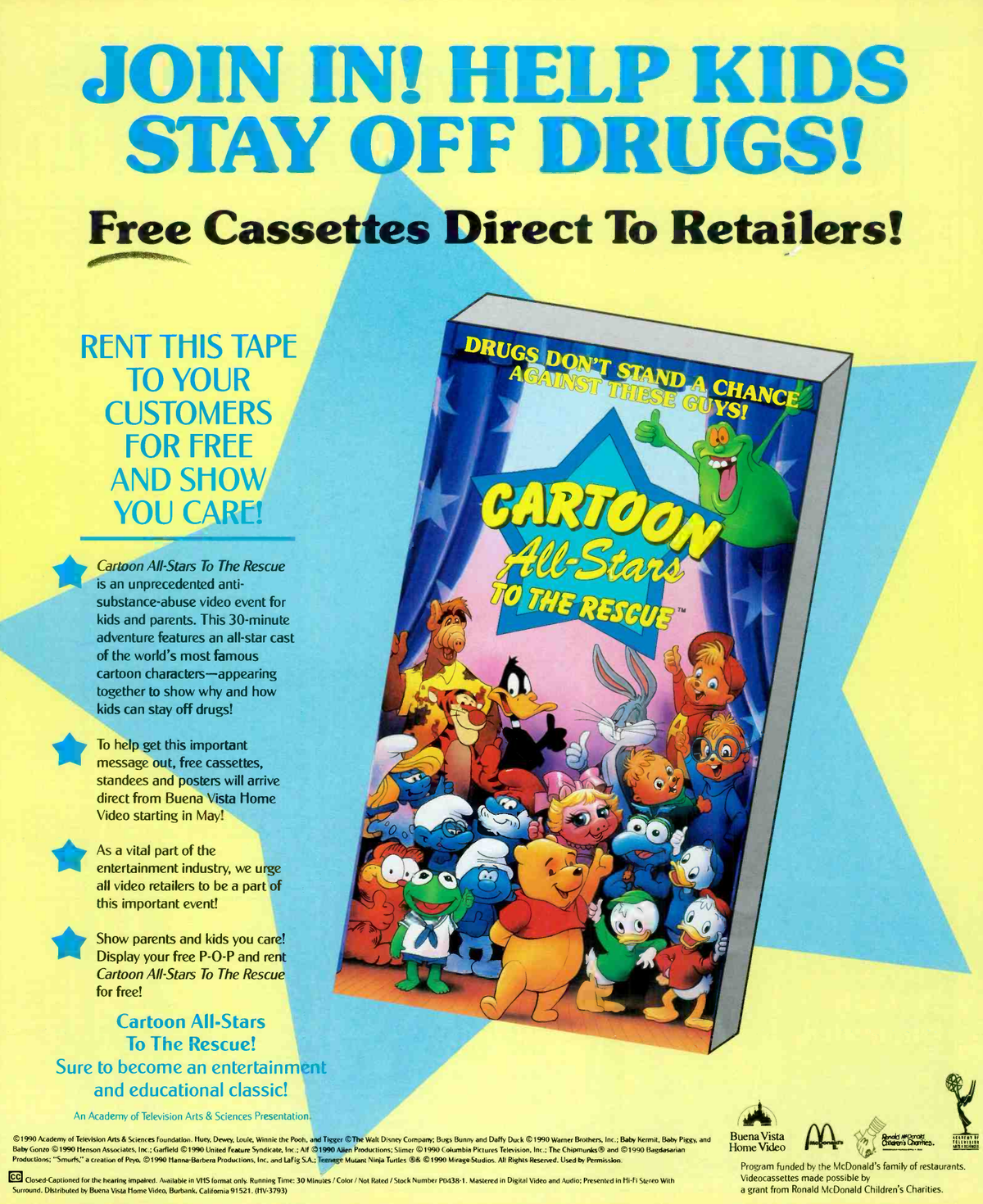
The physical distribution plan is especially clear in a May 19, 1990 Billboard advertisement. Buena Vista Home Video addressed video retailers directly. Free cassettes, display standees and posters were to arrive starting in May; shops were urged to lend the tape to customers without charging.
The small print separates two forms of support: the program was funded by the McDonald's family of restaurants, while the videocassettes were made possible by a grant from Ronald McDonald Children's Charities. This was a route from broadcast to video counter, with the charity's contribution built into the circulation of the object.
Cash Box had announced 250,000 videocassettes for schools, libraries, substance-abuse organizations and video stores. That is an announced distribution quantity, not a verified tally of copies delivered or children persuaded. Nor does the free-rental offer mean the characters or the film became public domain: the advertisement carries a crowded list of their separate copyrights.
The tape that survived
A museum can show more here than an unlikely group portrait. The promo records a station's invitation, the credits record a negotiated production, and the retailer advertisement records how the same program was meant to circulate after its scheduled broadcast.
Community-uploaded copies preserve that combination today. They are later transfers, not authenticated logs of every station's airing. Put one beside the distributor's advertisement and the collaboration becomes easier to read: rival stars shared a screen, television outlets made room, and a video retailer was asked to turn a commercial counter into a free lending point.