MOVIES / RENTAL NIGHT · After dark
Be Kind. Rewind. Beware.
Before the movie began, a shelf of boxes had already started telling stories.
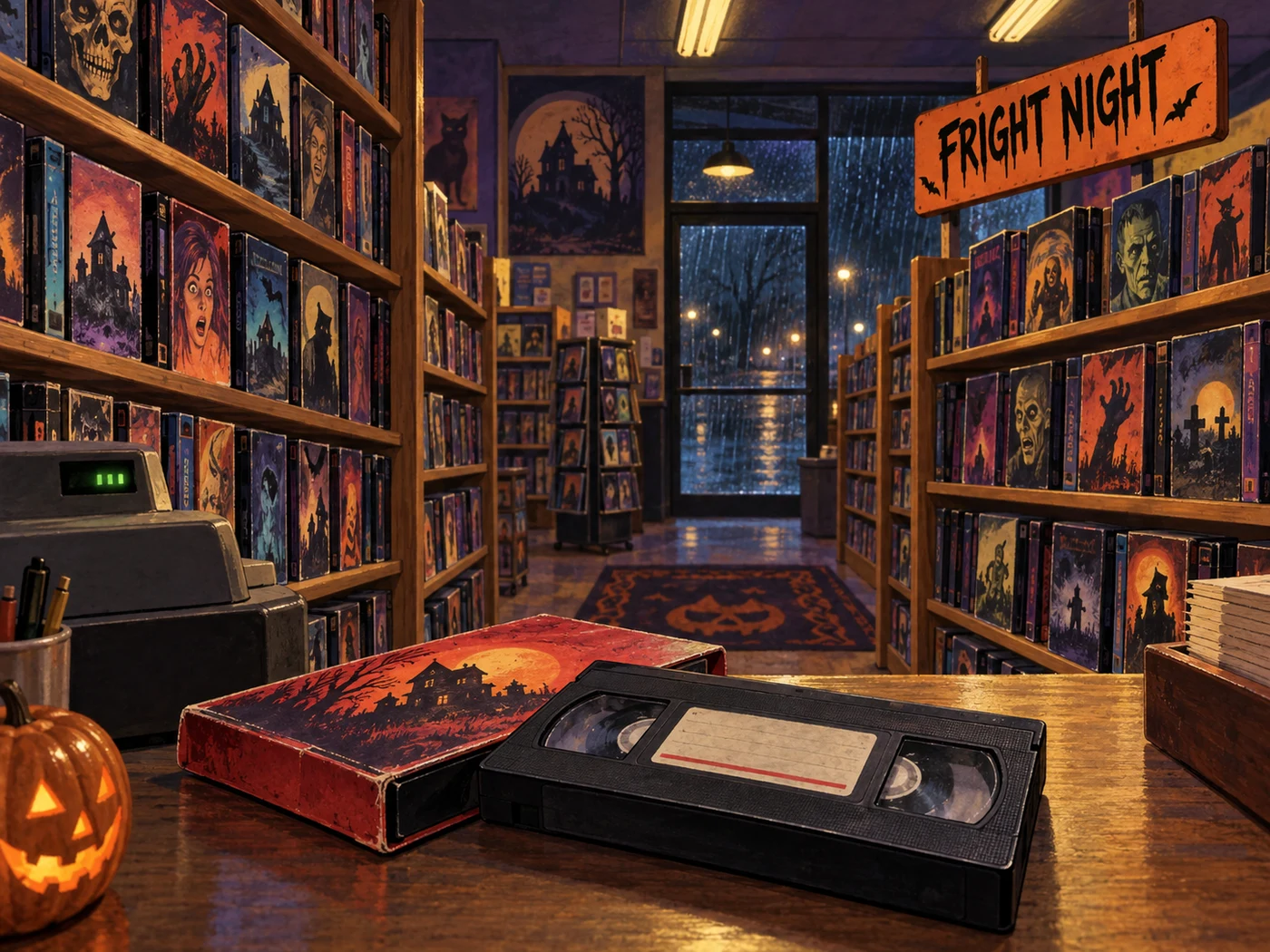
Imagine an October rental night. Rain on a jacket, a bright aisle, and a row of boxes making increasingly extravagant promises. One cover has a monster. Another has a house with exactly one light on. The movie has not started, but choosing it has already become part of the evening.
That scene is a composite, not a recovered memory from a particular shop. The surviving objects offer firmer ground: printed sleeves, cassettes, advertisements and the paperwork of borrowing. Each records a different part of the transaction between a story and the person deciding whether to take it home.
The box gets the first word
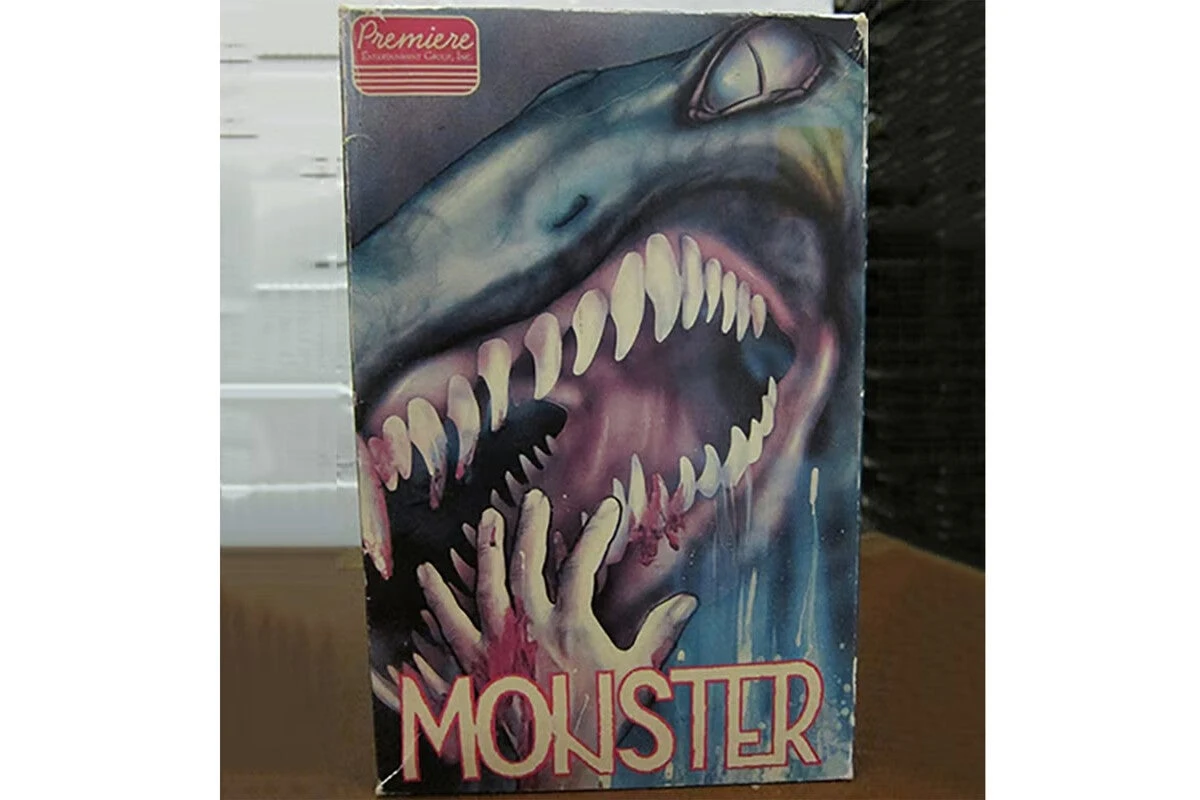
The Monster sleeve makes its argument from a distance. An enormous mouth occupies much of the picture, and the title anchors the bottom. It does not need to summarize every event in the film. It needs to give a browser something immediate to recognize: this box contains a creature, and that creature is the attraction.
Turn a sleeve over and the sales pitch can change shape. The front competes for attention; the back has room for explanation. A still image can suggest a setting, while a short description supplies a predicament. The physical act of turning the box separates the first impression from the closer inspection.
An aisle gives those impressions neighbors. A modest picture might look stranger beside a familiar title. A lurid illustration might be memorable even when its movie remains unwatched. A shelf is a kind of accidental exhibition, continually rearranged by the decisions of the people passing through it.
Seattle builds a collection
Scarecrow Video’s own history gives this ritual a local address. George and Rebecca Latsios opened the store on December 9, 1988, with about 600 titles at its Latona location. Before that, George had placed roughly 200 personal VHS tapes at Backtrack Records and Video. The story began with a collection finding a public shelf.
The store’s account also remembers Rebecca building shelving and making signs. As the inventory expanded, the business needed more space; it rented the adjoining unit in 1992. Those details bring the history down to the scale of the room. Every additional film needed somewhere to stand and some way for a customer to find it.
There is an appealing connection to the other collections in this issue. A toy poster makes room for another monster; a video shelf makes room for another film. The arrangement helps a visitor understand the whole while still leaving a particular object free to catch the eye. Collecting becomes a form of hospitality when other people can browse.
Why keep the packaging?
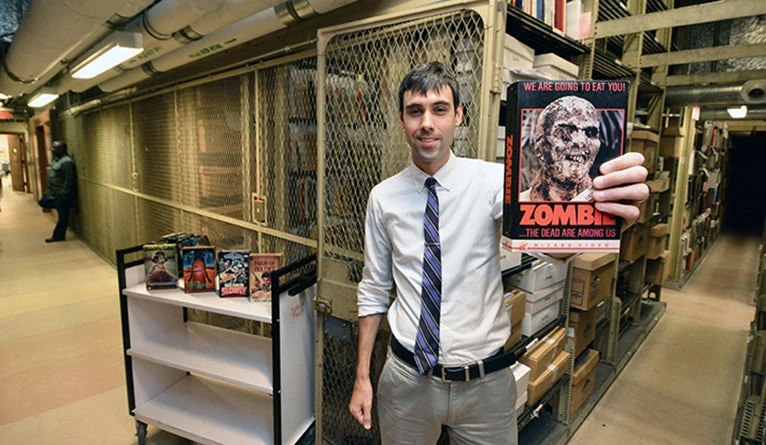
Yale’s 2015 account of its horror and exploitation collection makes the case for keeping the objects together. Librarian David Gary discussed the significance of the covers, and the collection sought tapes with their original boxes in good condition. The package could remain useful to a researcher even if the cassette eventually stopped playing.
In a separate interview, Gary and Aaron Pratt described an interest in the material around the feature: labels, blurbs, trailers and previews. That approach treats a home-video edition as a particular presentation of a film. Two copies of the same title can carry different evidence about how it was sold and what surrounded it.
The distinction changes what to notice. A distributor’s mark identifies a version. A worn edge records handling, though it cannot tell us exactly who held it. A surviving rental label may connect an individual copy to a shop. These details do not replace the film; they explain something about its journey to an audience.
In May 2016, Yale’s library hosted Terror on Tape, a symposium examining horror and home video alongside screenings on VHS. A format once treated as disposable entertainment had become the subject of organized study. The films could still entertain an audience while their physical editions supported a different kind of attention.
Take one home
Return to the imagined aisle and the choice feels richer. You are selecting a movie, but also a cover, a set of expectations and a little plan for the night. Someone will make room beside the television. Someone will insist the lights can stay off. Someone may decide, halfway through, that a lamp would improve the experience.
The best ending for this issue is that moment before play. The toys have been put aside, the last game room can wait, and the cassette is ready. Outside, the evening has gone properly dark. Inside, there is still time to choose just how frightened everyone wants to be.