
TOYS / KENNER · After dark
Who You Gonna Call? The Toys That Made You a Ghostbuster
Kenner put the equipment in your hands. The haunted house could be your own.
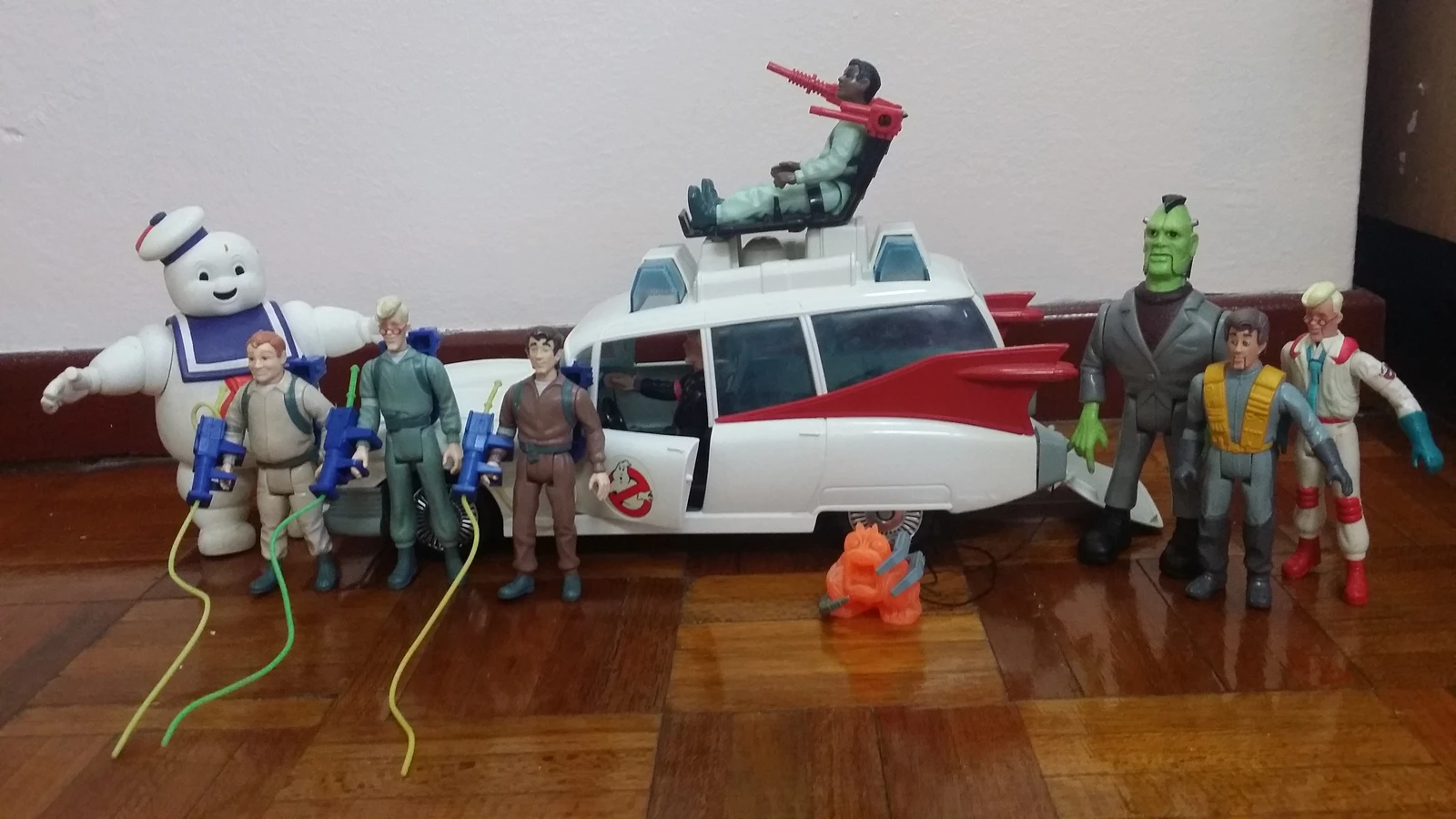
A chair can become a haunted staircase surprisingly quickly. Put a ghost beneath it, send a small plastic figure across the carpet, and the room acquires a second identity. The toys of The Real Ghostbusters were unusually good at that transformation. They offered a job to do, equipment for doing it, and wonderfully unreasonable things to find behind the furniture.
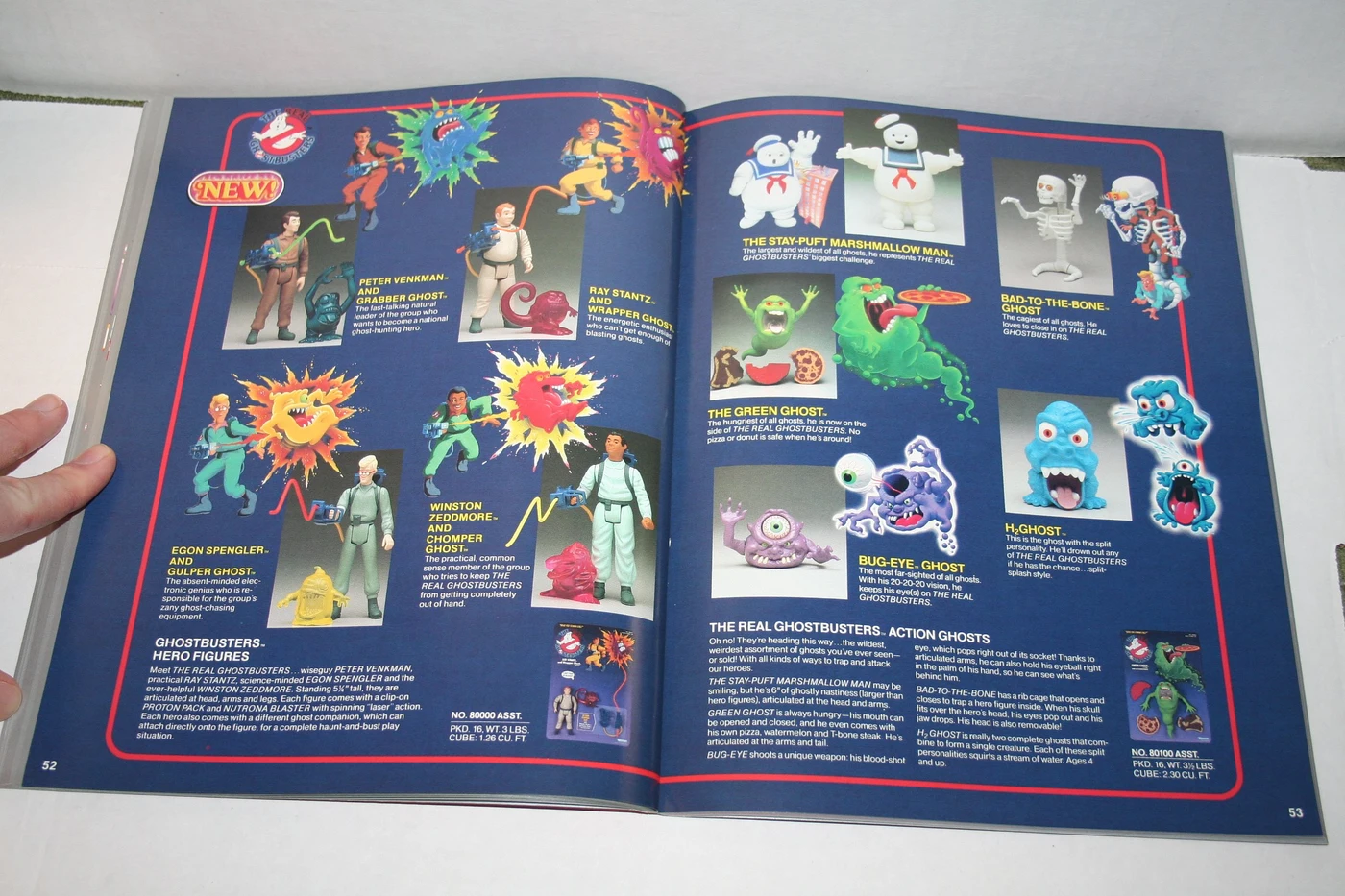
Kenner’s company chronology places the introduction of its Real Ghostbusters action figures late in 1986. The 1987 Toy Fair catalog shows the idea expanding across figures, vehicles, goo and equipment a child could wear. This was the animated Ghostbusters world rendered in plastic: a practical business with a gloriously impractical customer base.
A team you could recognize
Look at the catalog’s hero spread. The four figures share the working silhouette of a jumpsuit and a backpack, but their different colors and faces keep them readable at a glance. A bright stream extends from the equipment. It turns an invisible effect into a piece that can be pointed, moved and aimed at the creature on the other side of the table.
That visible connection matters in a toy. On television, editing and sound can explain what an energy beam does. On the floor, a molded stream has to communicate by shape alone. It gives the player a line to follow from the figure to the ghost. The gesture is legible even without batteries, dialogue or an audience.
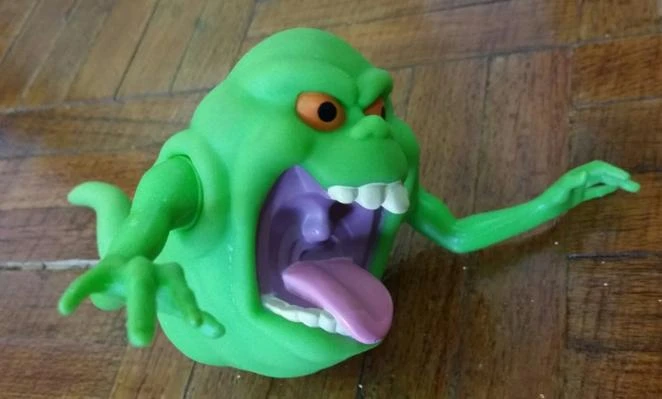
The same spread makes the opponents look like a separate collection of comic problems. They have oversized eyes, exposed teeth and bodies built around a conspicuous trick. These are creatures meant to be handled and inspected. Their exaggeration supplies the joke before the player has invented a single line of dialogue.
The player joins the business
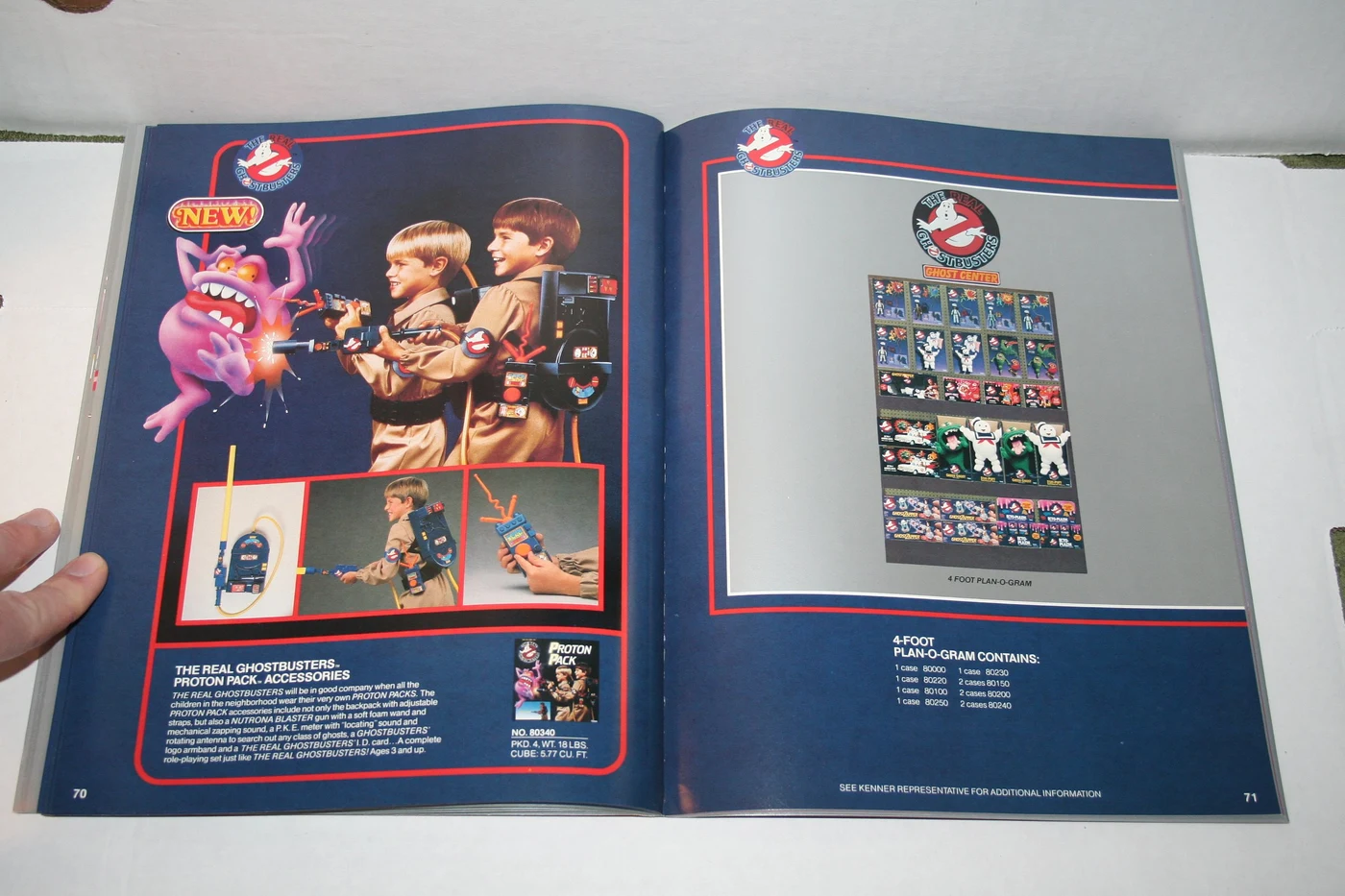
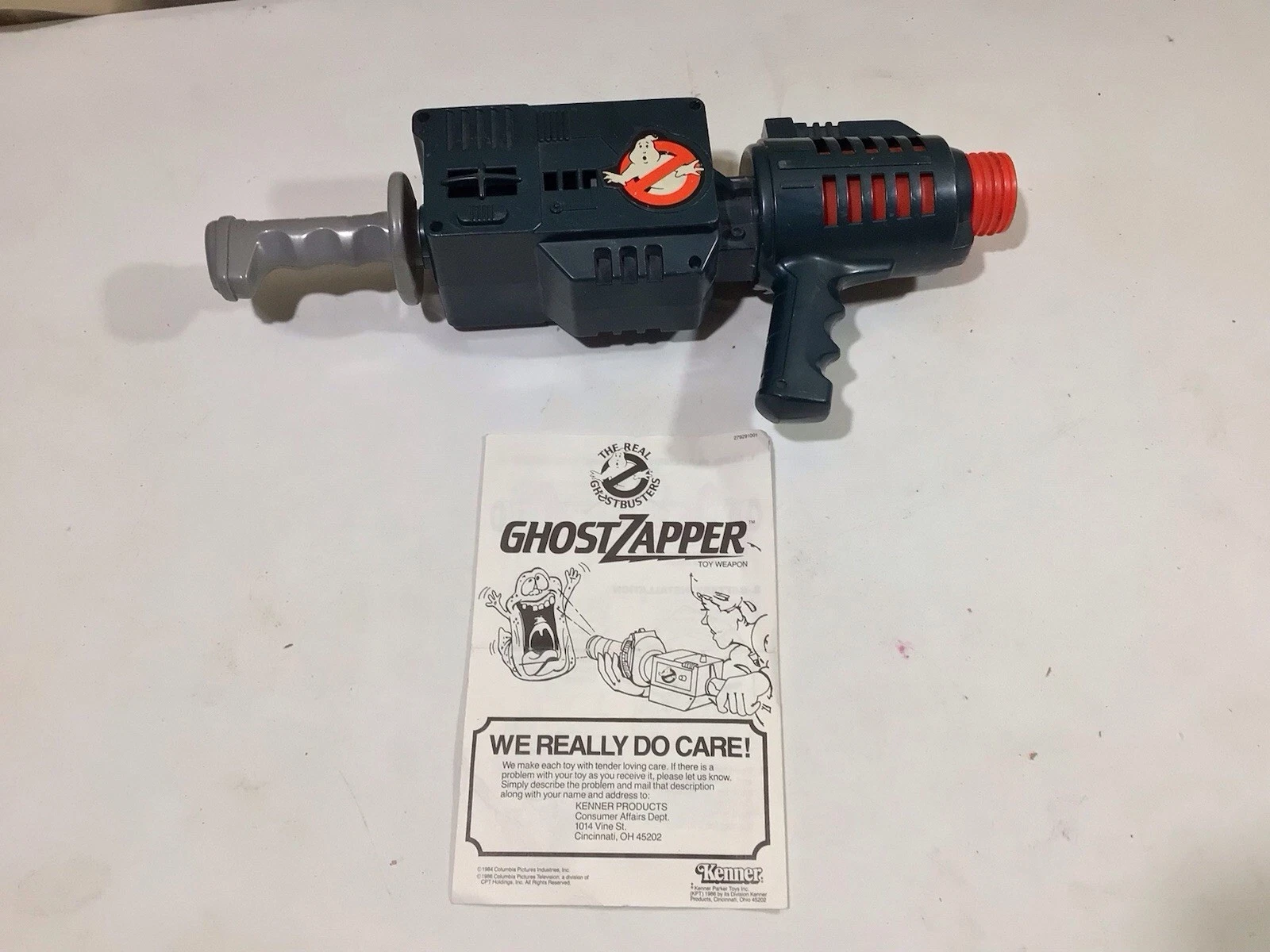
The Proton Pack changed the scale of the invitation. Kenner’s catalog shows children wearing the equipment instead of merely holding a character who wears it. On the facing page, a planogram arranges the merchandise for a store. The contrast is revealing: one side imagines the adventure, while the other explains how a retailer might put that adventure within reach.
A wearable pack shifts the center of a story. A figure needs a stage small enough for its feet; a child already has a whole house. A hallway supplies distance. A closed cupboard supplies suspense. A sibling can become the customer, the assistant or the person who insists there is absolutely nothing behind that door.
There is something reassuring about this sort of imaginary equipment. It makes an encounter feel procedural. First investigate, then point the device, then decide whether the problem has been solved. The player can repeat the sequence until the scary part becomes familiar. The machine does not need to work in the adult sense to give the game a useful structure.
A vehicle with a second life on paper
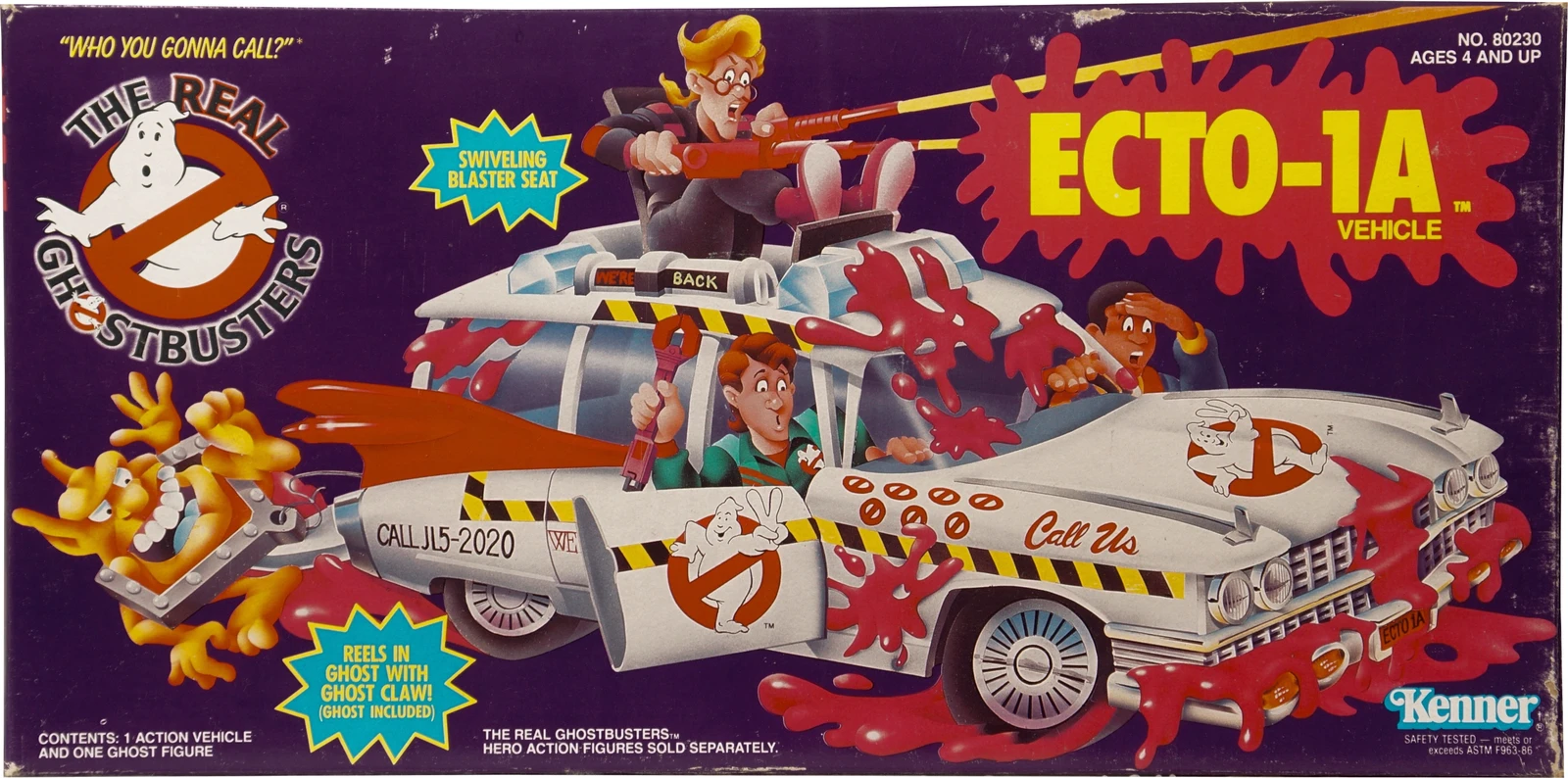
Packaging supplied another kind of special effect. The Ecto-1A artwork preserved by KennerCollector combines a white car with brilliant pink and orange creatures and strongly directional beams. The collector’s record identifies airbrush, brushwork and marker in the original piece. This was a constructed illustration, with physical working layers, before it became a printed promise on a box.
The distinction between Ecto-1 and Ecto-1A is worth keeping visible. The first vehicle appears in the 1987 catalog; the later artwork shown here was also used in the 1990 catalog. Placing them in sequence lets the line have a history, instead of flattening every remembered Ghostbusters toy into one enormous Christmas morning.
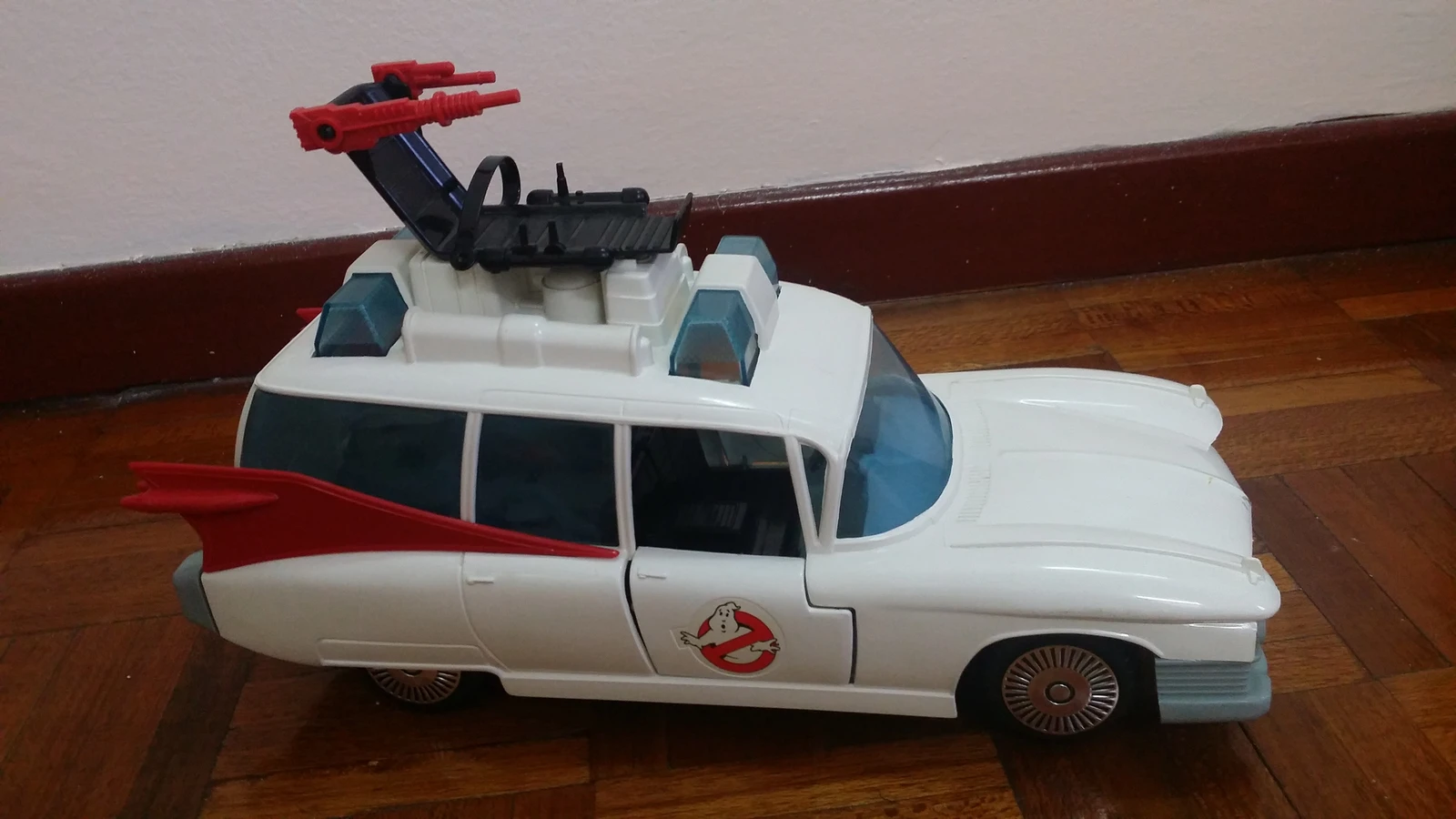
Read the artwork as a miniature stage direction: move the car through the scene, bring a ghost close, aim the equipment outward. Its energy continues beyond the edges of the vehicle. A box can suggest more action than a parked toy contains, leaving the player to supply the missing movement and noise.
The house after the lights go down
The appeal survives a missing accessory or a faded sticker. A few recognizable pieces are enough to restart the situation: someone notices something strange, someone volunteers to investigate, and an ordinary room becomes a place with a secret. The equipment gives the imagination a handle.
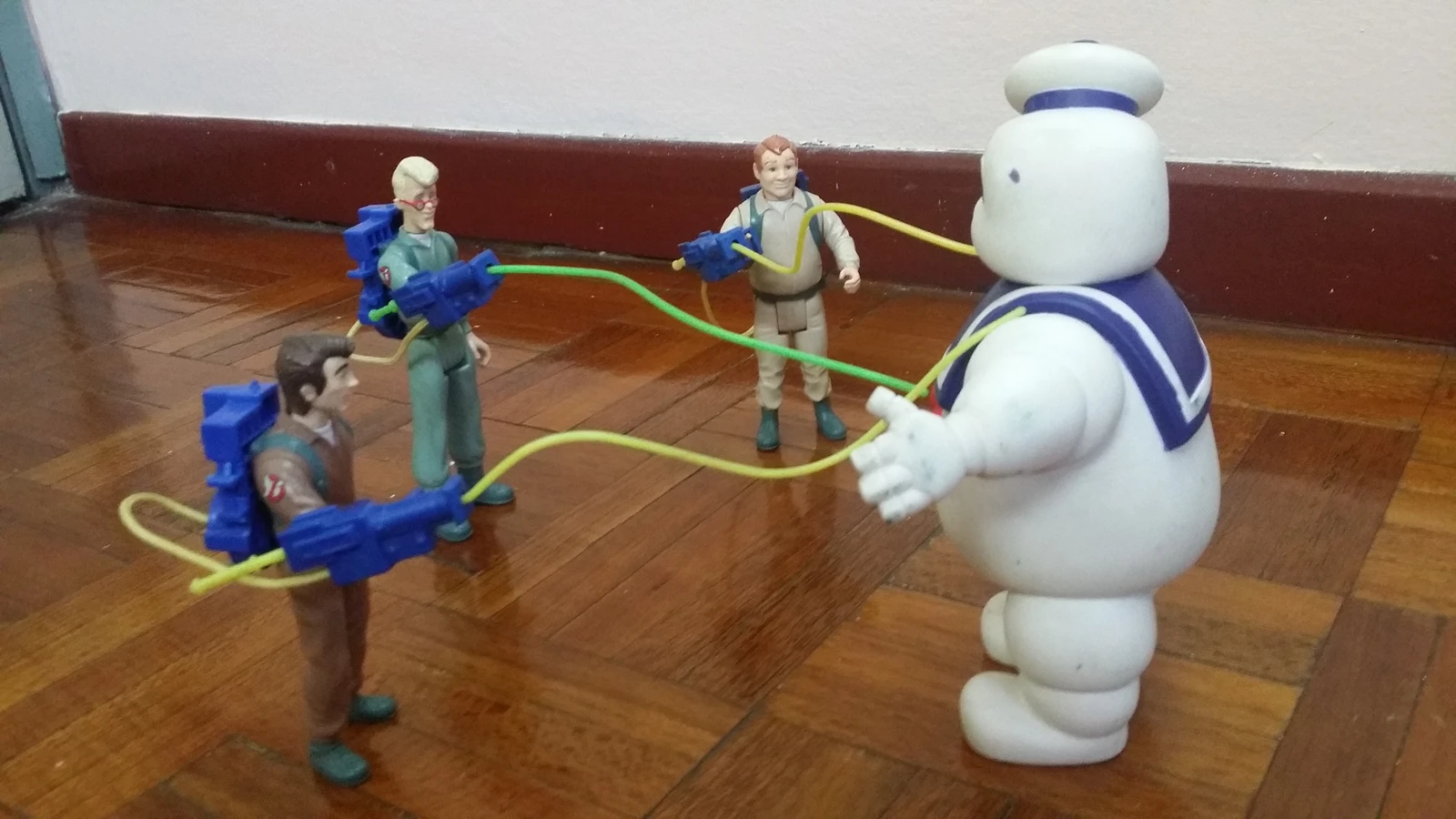
That is the Halloween spirit of these toys. Their world leaves room for apprehension, but it also gives the player a role with purpose. The thing under the chair can be ridiculous, troublesome and a little frightening at the same time. Pick up the pack, call the team, and the room is ready for another case.