
TOYS & EVERYDAY LIFE · Moon magic
Ten Seconds to Say Something
Marmalade Boy’s small robot could hold a message—and carry a piece of an anime romance into everyday life.
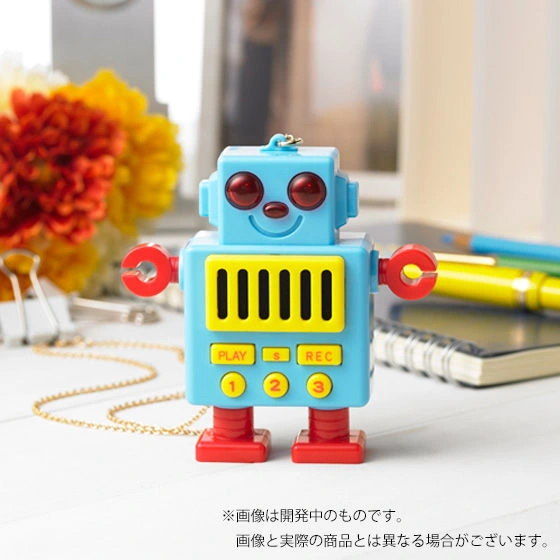
A message does not have to be long to feel difficult to deliver. A little robot offers another way to do it: record a few words, hand over the object, and let someone press Play. That is the small piece of everyday theatre at the center of Marmalade Boy’s Voice Memo.
The television anime began in Japan on March 13, 1994, adapting Wataru Yoshizumi’s manga. Bandai’s later account identifies the robot-shaped recorder as an object used by Miki and Yuu to exchange messages in the story. Children could buy a working version of that familiar object.
A voice in a little machine
Bandai described the 2015 reproduction as retaining the original functions: three messages, each up to ten seconds long, with eyes that light during playback. The same year’s company announcement reported more than 400,000 units sold in the original product’s first year. Those details come from the manufacturer’s retrospective account.
The limits are part of what makes the object interesting. Ten seconds is time for a sentence, a greeting or a small confession. The recorder cannot stretch the conversation indefinitely. Someone has to choose what to say, and the person receiving it has to decide when to listen.
A world of personal belongings
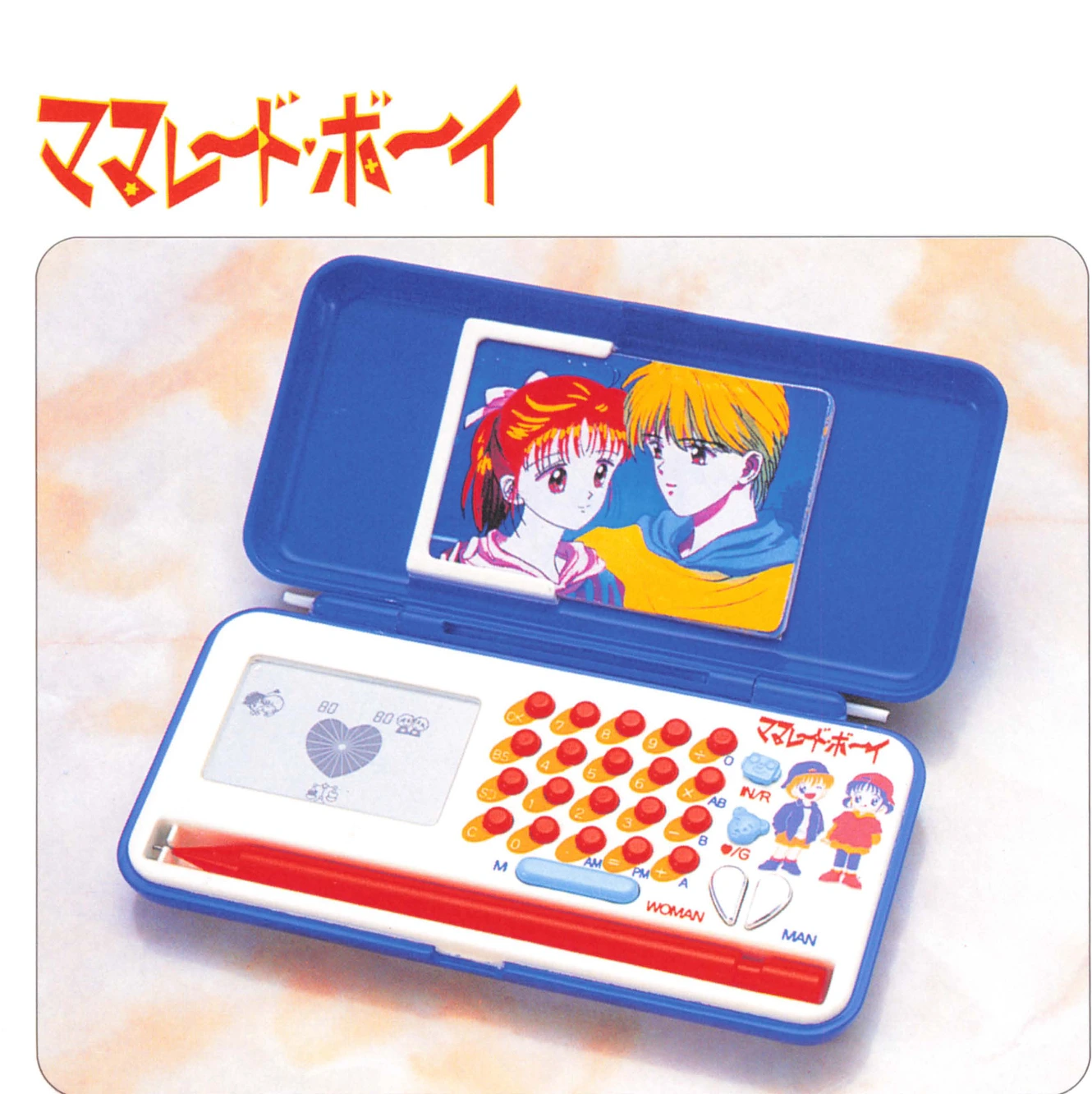
The 1994 catalogue places the series on diaries, organizers and small electronic devices. A lockable exchange diary is one especially clear expression of the idea: a story about relationships attached to something intended to pass between people. The character artwork shares space with the functions of an ordinary possession.
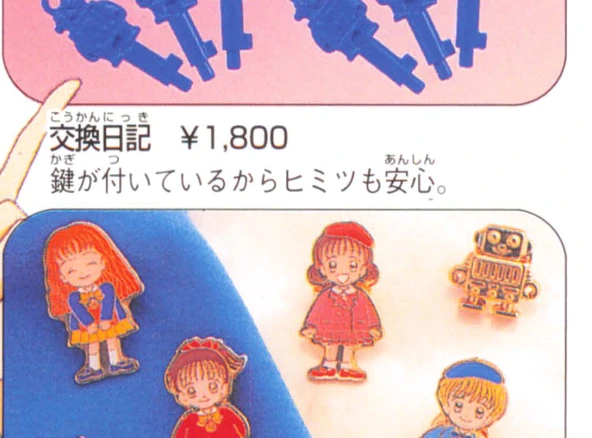
The Voice Memo belongs to that wider world of objects, but it has an unusually direct connection to an action within the story. It invites its owner to do something the characters did. That is the hook worth following: an anime accessory with a task, an audience and a small amount of time in which to speak.
The adult reproduction brought back the recorder’s shape and function together. Its meaning rested on the recognizable object and on what it let a person do. A tiny machine could keep a voice briefly, then give it back. The next part of the exchange belonged to someone else.