VIDEO GAMES · Moon magic
OutRun: Take the Long Way Home
A red car, three radio choices and a road that keeps asking which way you would rather go.
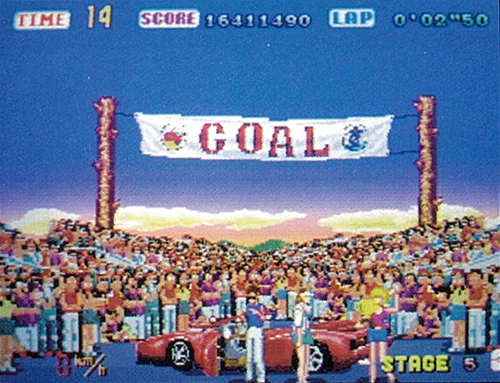
The clock wants a quick answer. The road offers a more pleasant question: which way would you like to go? OutRun makes those two impulses share a steering wheel. It is a game of reaching checkpoints, but it frames the effort as a drive through somewhere you would like to be.
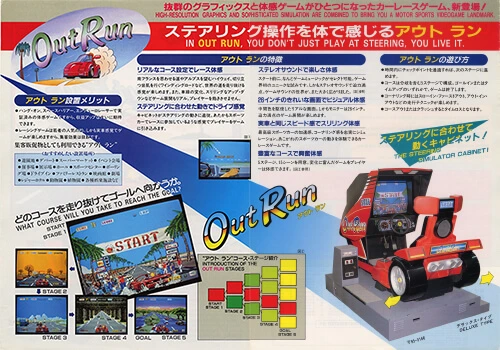
SEGA dates the arcade release to September 1986. Its own history describes fifteen branching courses, sixteen possible routes and five destinations. The forks give a short run a little geography. A turn is both a decision about the next challenge and a decision about the next view.
Choose the journey
That structure changes how the game presents progress. You are not simply completing one road and seeing the same scenery more efficiently next time. There are alternative paths to explore. Even within a timed arcade session, the route diagram leaves a suggestion of trips you have yet to take.
The scenery helps hold that suggestion together. SEGA’s retrospective points to deserts, stone gateways, old streets and windmills. The environments are distinct enough to become destinations in the imagination. The appeal is partly the car, but it is also the thought of what might appear beyond the next rise.
Set the radio first
Before the journey, the arcade game offers three music choices: “Magical Sound Shower,” “Splash Wave” and “Passing Breeze.” Selecting a track gives the player a say in the atmosphere. The route belongs to a timed driving game; the music makes it feel like a personal outing.
Later versions changed that soundtrack. SEGA’s music collection distinguishes the original arcade tracks from additions made for the Mega Drive, 3DS and Nintendo Switch editions. The 1991 Mega Drive release, for example, offered four in-game music choices. Keeping those editions separate matters when a familiar tune is doing the work of memory.
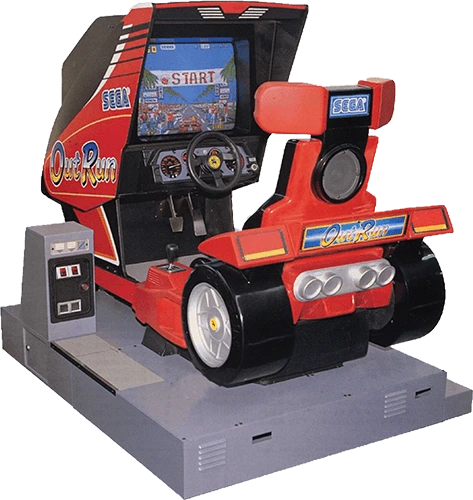
A wheel, a radio selection, and a fork in the road are modest freedoms. Together they make an arcade machine feel like an invitation to leave for a while. The deadline remains, yet the world beyond the windscreen gives the player something else to think about: the next place, the next song, and the trip that might follow this one.