
TOYS & IMAGINATION · Moon magic
Moon Magic You Could Hold
A heart-shaped compact, a turn of the wrist, and the moment a television fantasy became something you could do.
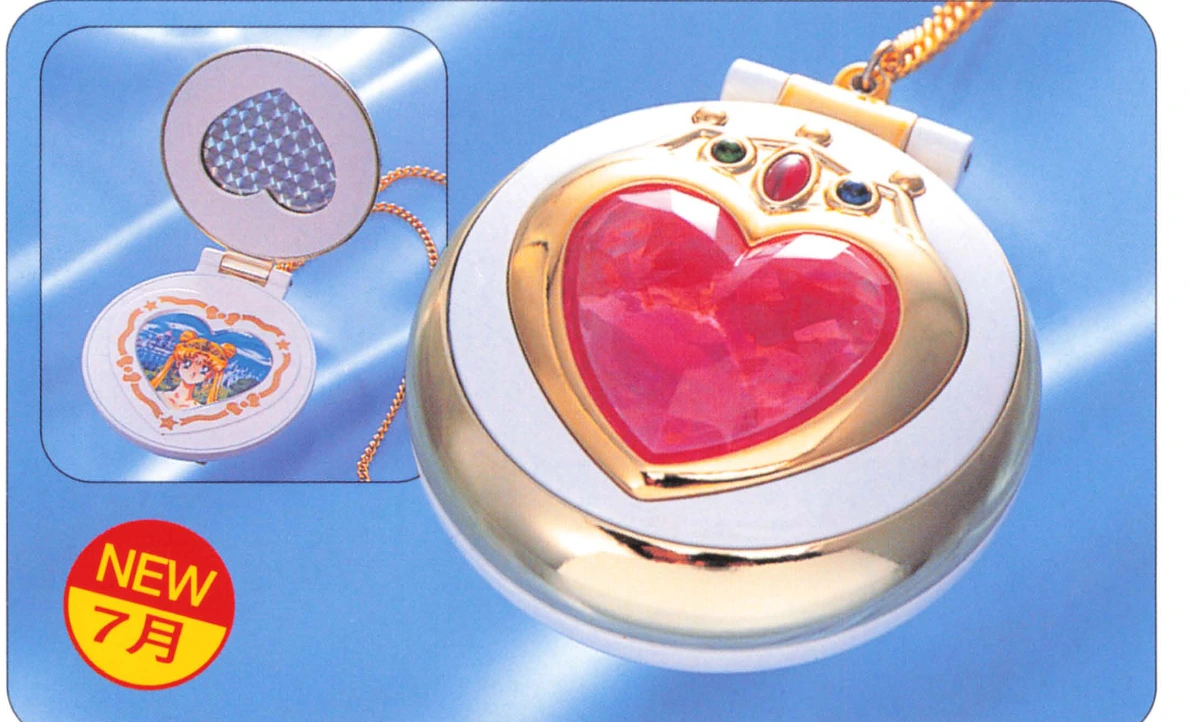
The hinge is a small thing. Open it, though, and the object changes character. A pink-and-gold heart becomes a secret you can hold in your palm. On television, a transformation carries a schoolgirl into another identity. In a child’s hands, a compact offers a physical beginning: open the lid, say the words, imagine the change.
Bandai’s 1994 Japanese catalogue puts that invitation on a blue satin backdrop. The Cosmic Heart Compact sits beside the Spiral Heart Moon Rod, their hearts, jewels and gold trim catching the light. They are toys of particular objects, with shapes that ask to be carried and gestures that ask to be repeated.
A transformation with a hinge
Sailor Moon S began its Japanese television run on March 19, 1994. Its new enemies and new Sailor Guardians gave the familiar heroine another world to negotiate. The catalogue introduces that season through its equipment: the rod and compact take their place before the dolls and miniature rooms.
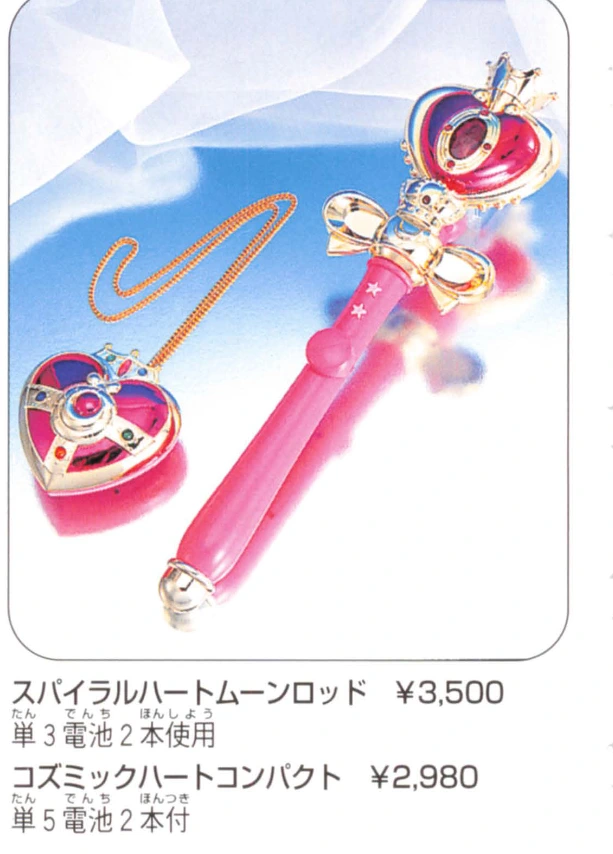
The catalogue asks the reader to notice materials as much as characters. Bright pink plastic meets reflective gold; colored stones punctuate the ornament. The details turn a screen image into an object with an edge, a surface and a size. A magical accessory becomes something that can live among ordinary belongings.
Bandai’s later account of the original toy planning helps explain that relationship. A developer writing in 2018 described consulting a colleague who had worked on the early toys. The disguise pen needed to make sense as an everyday possession: a disguise should not announce itself. Transformation accessories, meanwhile, connected changing one’s appearance with changing one’s feelings. The recollection concerns the earlier brooch and pen, but it gives useful context for reading the 1994 designs.
A season on the shelf
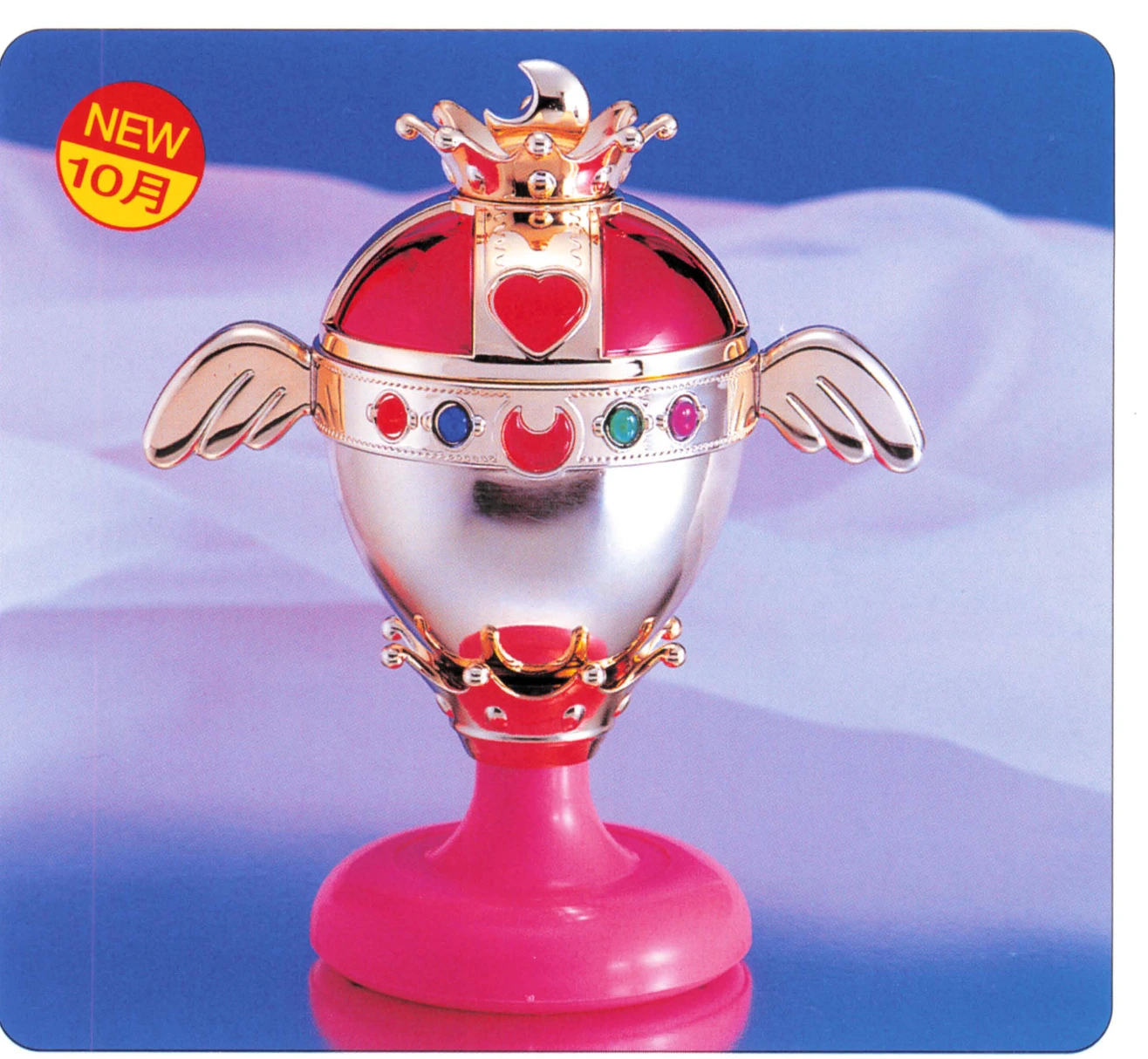
Turn the page and the Rainbow Moon Chalice takes almost the whole photograph. Its crown, wings and colored jewels make a more elaborate silhouette than the compact. A red-and-yellow badge announces October, while the price is marked as planned. This is a record of how Bandai presented the coming season, rather than proof that every announced item reached every shop on that schedule.
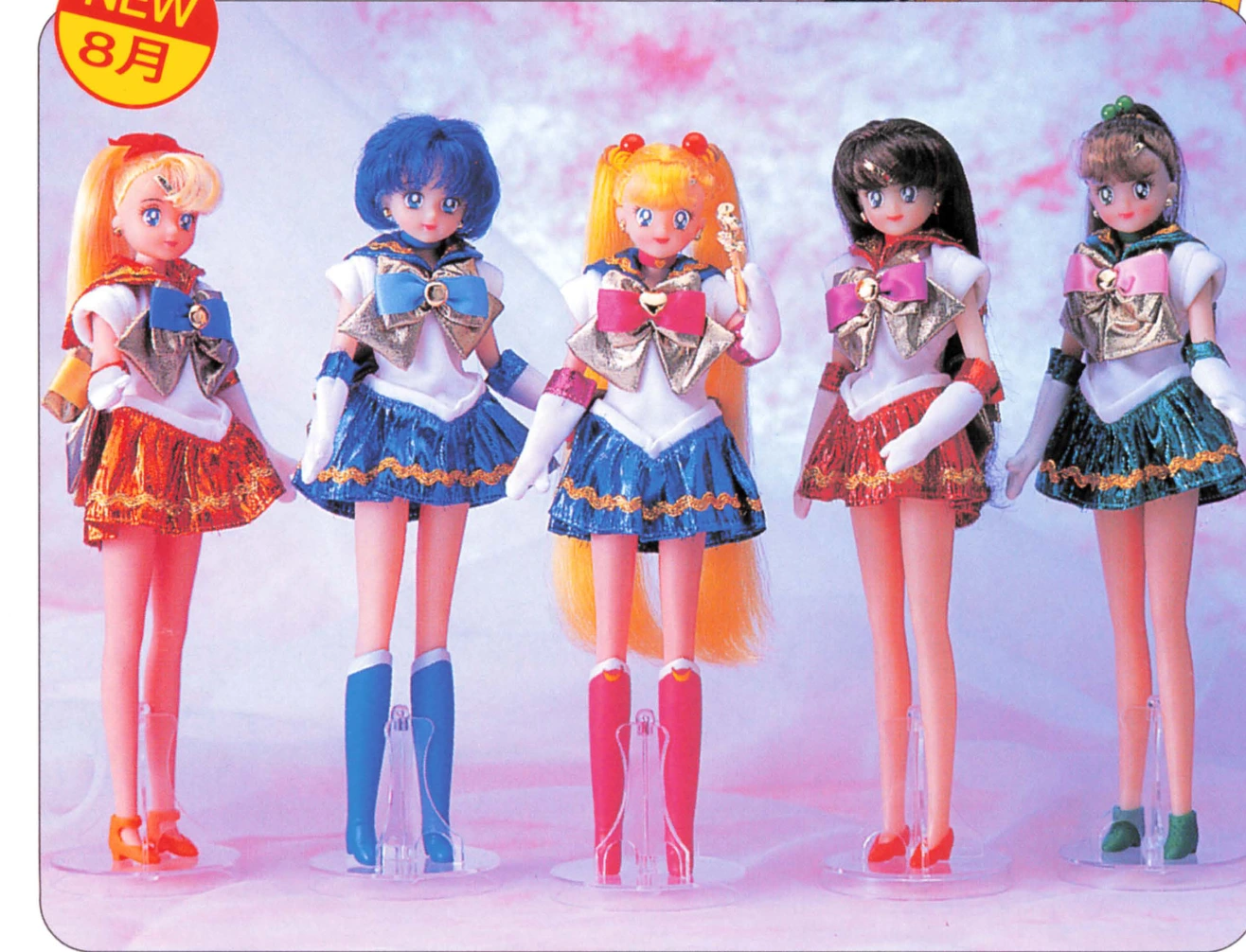
The photographs build a sequence of possibilities. First the objects that enable an adventure, then the characters who inhabit it. A row of dolls turns the team into a group you can arrange. The toy line offers both a role to step into and a cast to move around.
Room for an ordinary afternoon
There is more here than the spectacular moment of transformation. A miniature cosmetics boutique has counters, chairs and a patterned floor. Another playset offers Usagi’s room. Those small interiors leave room for the parts of an imagined life that happen between battles: visiting, dressing, setting things out and putting them away.
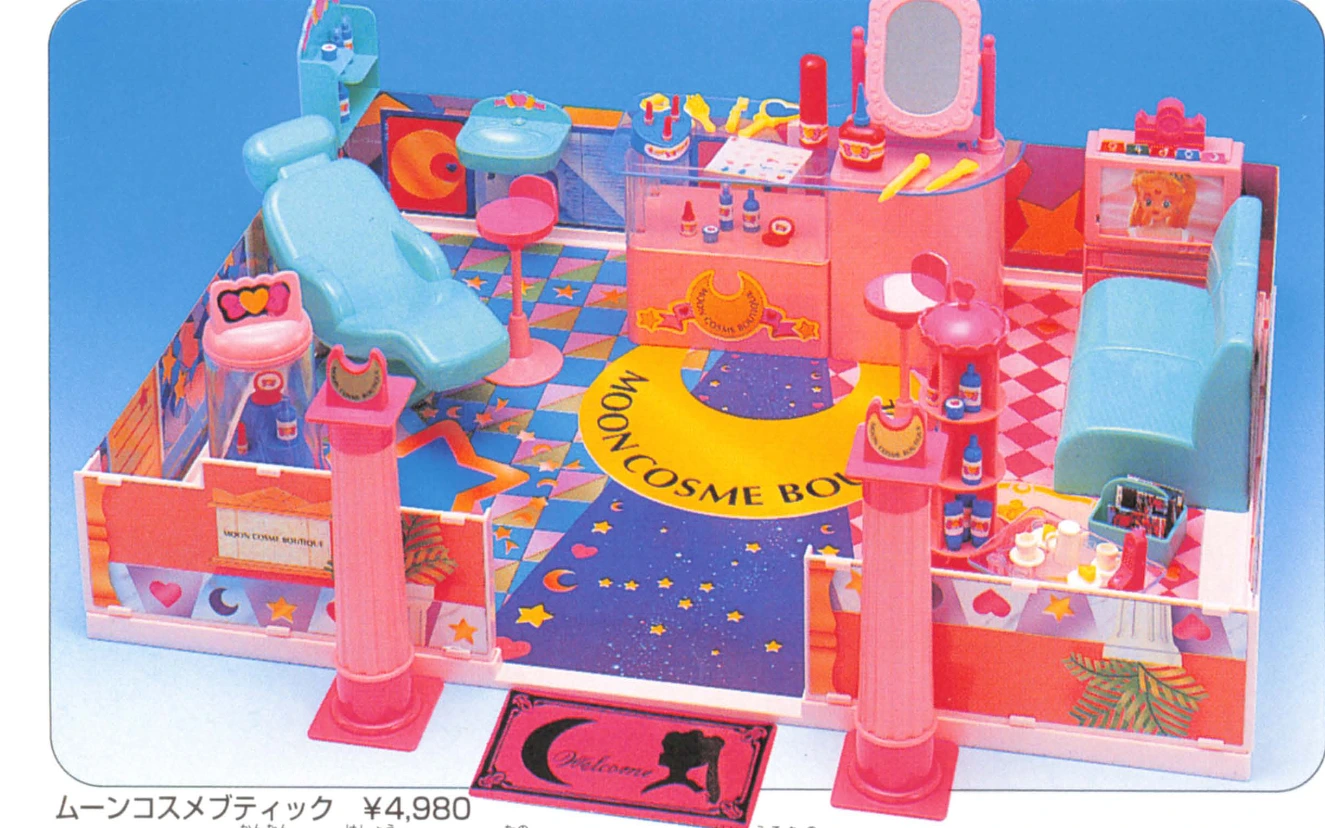
Elsewhere, the same world fits into compact-shaped electronics and decorated organizers. The catalogue’s variety is revealing. A favorite character could become an adventure prop, a doll, a room, or an accessory used in a much quieter kind of play. The objects give that attachment several forms.
The compact comes back
In December 2013, Bandai announced practical mirror cases modeled on the old Crystal Star and Cosmic Heart toys. It specifically addressed women who had admired Sailor Moon twenty years earlier. The cases preserved the reflective pink and gold finishes, added glass mirrors and offered space for small belongings. Even the packaging deliberately recalled the earlier designs.
That announcement also supplied a measure of the originals’ reach: Bandai reported about 440,000 Crystal Stars sold in 1993 and about 290,000 Cosmic Heart Compacts in 1994. These are the manufacturer’s retrospective figures. They help explain why a single recognizable shape could carry so much meaning into a later product.
The new case had a different job, but it still opened. That is a fitting way to return to the old catalogue: to the hinge, the shine, and the small action a television story made possible. The fantasy had acquired a place among someone’s belongings. Years later, there was still a reason to carry it.