
VIDEO GAMES · Wish big
Player Two Has Arrived: Nintendo’s R.O.B.
The little robot that helped Nintendo sell a game console as a toy.
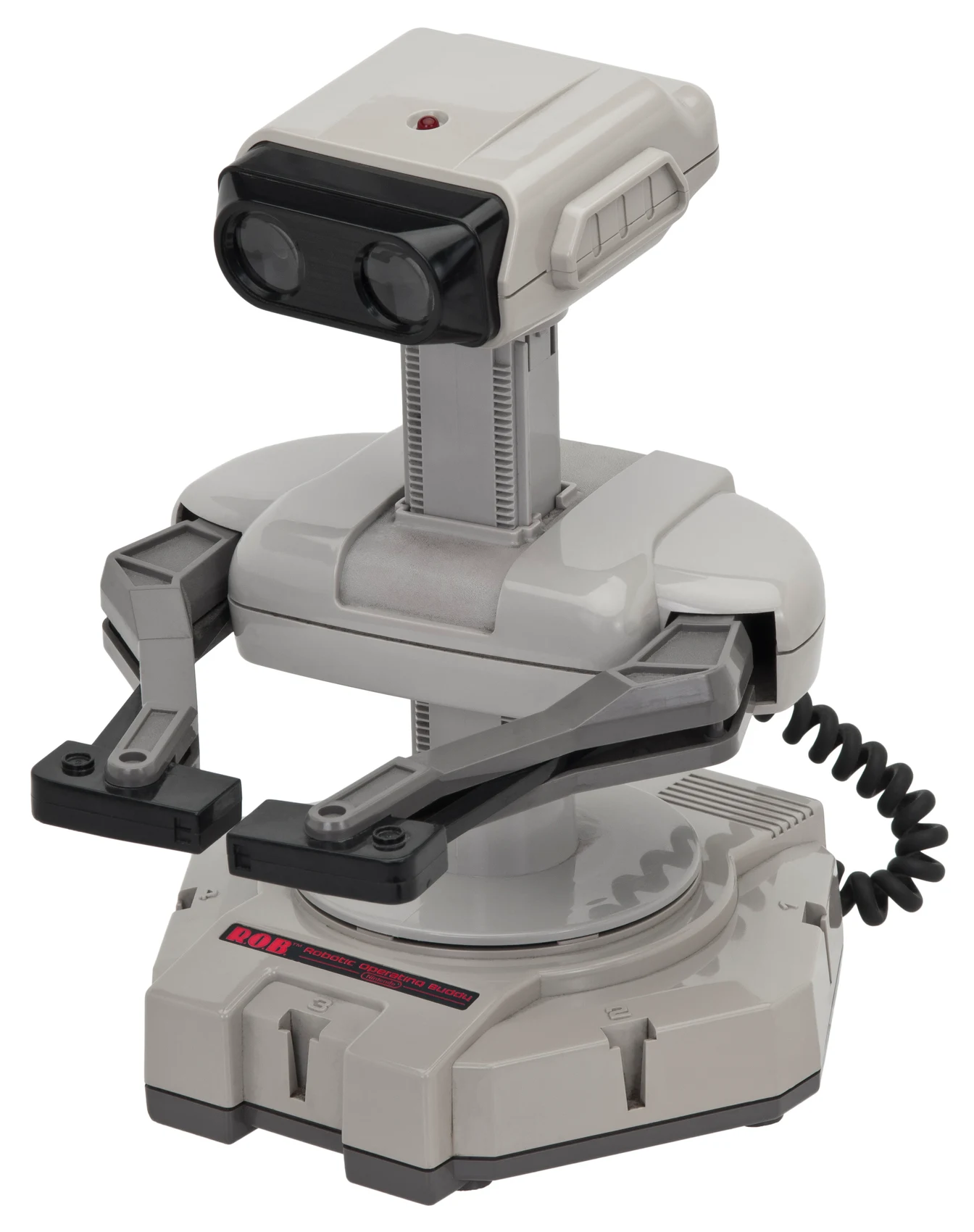
Before R.O.B. could become a child’s playmate, it had another audience to win over: the people deciding what belonged on a toy-store shelf. After the American video-game crash, a new console was a difficult sell. A robot gave Nintendo something different to demonstrate. With a face, jointed arms and a job beside the television, R.O.B. helped make the Nintendo Entertainment System look like a new kind of toy.
Nintendo dates the Robotic Operating Buddy to 1985. The name describes an accessory, but it also proposes a relationship. A controller is something to operate; a buddy is someone to play with. That difference helps explain the robot’s strength as a wish-list object. Its purpose could be imperfectly understood and its personality would still be immediately apparent.
A toy-store Trojan horse
The Video Game History Foundation’s launch archive traces that change through 1985. Nintendo first showed an Advanced Video System with keyboards and wireless peripherals at the January Consumer Electronics Show. Retailers were wary. By the summer show, Nintendo had dropped those extras, added the robot and begun presenting the NES as a toy. R.O.B. helped change the sales pitch before the system reached its New York test market that fall.
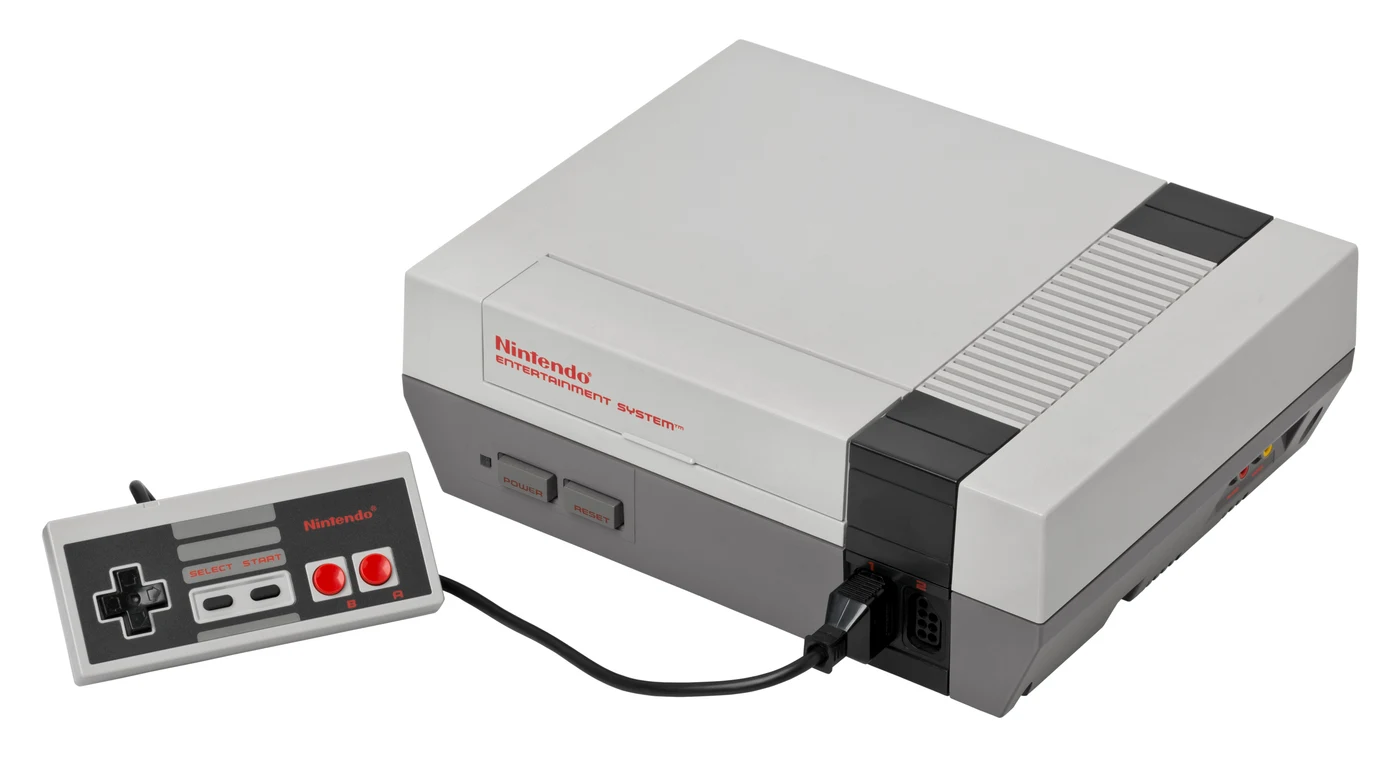
Former Nintendo of America marketing manager Gail Tilden remembers the need to give retailers a clear reason to reconsider video games. In her account, the robot was more than a disguise: the team believed it would attract attention, before understanding how limited its gameplay would be. Nintendo launched with the robot in its Deluxe Set, then soon offered other bundles. The toy-store strategy mattered more than a long future of robot-compatible games.
How the screen reached the floor
R.O.B. received commands through precisely timed flashes from a CRT television, detected by a sensor in its head. Adafruit’s later investigation of the hardware demonstrates that optical control system. The robot was not watching the action and deciding what to do. It was responding to signals arranged for it by the game, a narrower capability with a surprisingly theatrical result.
In Gyromite, the accessories translate the robot’s movements into controller inputs. The museum’s description identifies the colored button arrangement that operates a second NES controller. This makes the performance wonderfully roundabout: the electronic game directs a physical machine, and the machine helps operate the electronic game. The detour is the attraction.
There is pleasure in seeing that detour happen slowly enough to follow. A motor turns, an arm changes position, an object is handled. A child can point to the chain of events instead of accepting that everything happened invisibly inside a chip. The mechanism supplies a little stage show beside the much quicker action on the screen.
A short career, a long memory
Only two games supported the original accessory: Gyromite and Stack-Up. That limited library matters. R.O.B. was not a general-purpose partner that could join any cartridge put into the machine. A photograph of the hardware, however appealing, cannot communicate all of those boundaries. Understanding the accessory means holding its inventive presentation and its narrow practical role together.
The robot also depended on its television environment. Adafruit’s reconstruction explains why its original optical method was tied to CRT timing, then demonstrates another way to provide the necessary flashes. It is a reminder that an old peripheral is part of a system: display, software, accessories and mechanism all contribute to what it can do.
Nintendo eventually gave R.O.B. another sort of life as a playable character, including appearances in Super Smash Bros. The company’s amiibo description explicitly connects that later character to the 1985 accessory. A device that once moved beside the screen could now move inside it, carrying its recognizable eyes and arms into a different generation of play.
For this issue’s imagined wish list, that is the irresistible detail. The robot sold a brief glimpse of the future as a friendly object on the floor. Its real abilities were specific, but the idea it made visible was expansive: perhaps the next box you unwrapped would contain something that could play back.