
TOYS & IMAGINATION · Wish big
Circle Something Wonderful: The Sears Wish Book
Before the presents, there was the page.
Imagine a November afternoon with a catalog spread across the floor. A pencil hovers over a robot, moves to a vehicle, then returns to the robot. Nothing has been bought. No wrapping paper has been torn. Yet a substantial part of the holiday has already happened: someone has pictured a different version of the room, with one extraordinary new object in it.
The Sears Christmas Book began in 1933. Its first edition was only 87 pages long, and toys occupied 25 of them. The rest was devoted to gifts for adults. That proportion complicates the familiar memory of an enormous book made entirely of playthings. Children could turn a general family shopping exercise into a private toy exhibition simply by knowing which pages to visit.
A store you could keep open
Sears formally adopted the Wish Book name for its Christmas catalog in 1968, although shoppers had used similar nicknames for its catalogs much earlier. By that year the Christmas volume had reached 605 pages. The name was unusually apt: buying required money and a decision, but wishing could continue for as long as the book stayed open.
A paper catalog gave desire a location. You could remember that the interesting thing sat near the lower corner, across from the larger thing you probably would not get. Returning to that place took a practiced flick through the pages. The book could also be handed across a table, with a finger holding the exact spot. It made an otherwise vague request wonderfully specific.
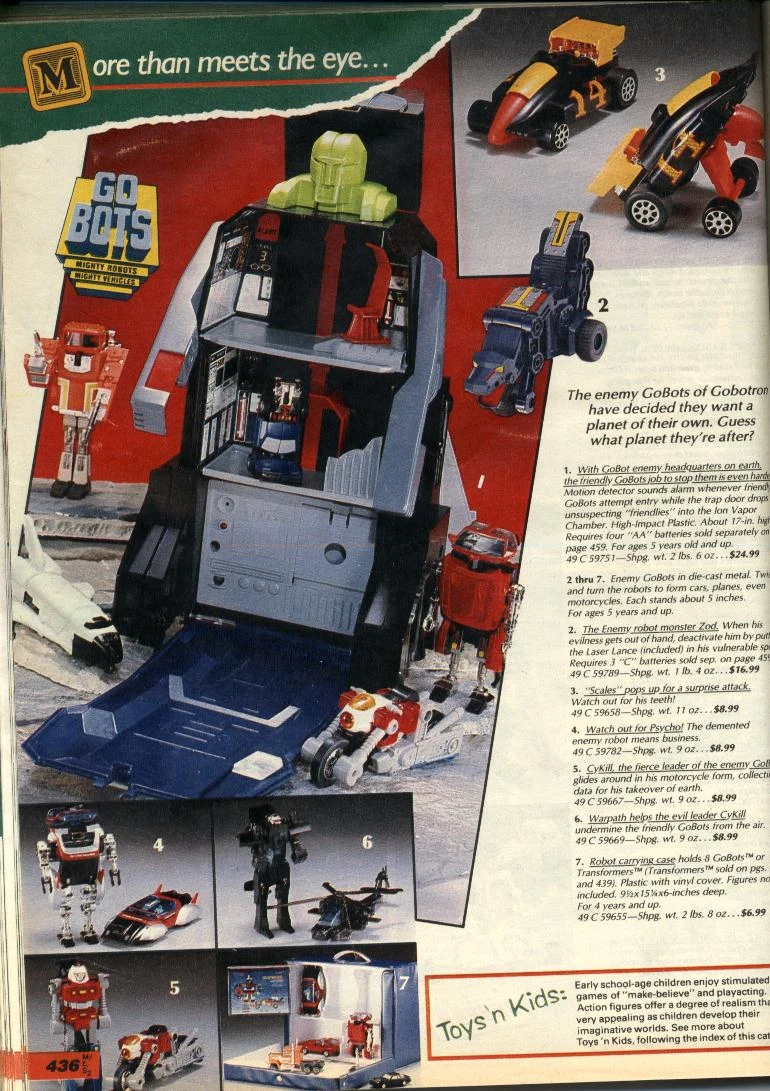
On the surviving 1985 Gobots page, a large Command Center rises above a scatter of smaller figures. The arrangement proposes a world before the copy explains the individual products. There is somewhere for the little robots to go and a substantial object around which to organize them. Even a reader interested in only one figure receives a picture of the larger game.
Read the small print, too
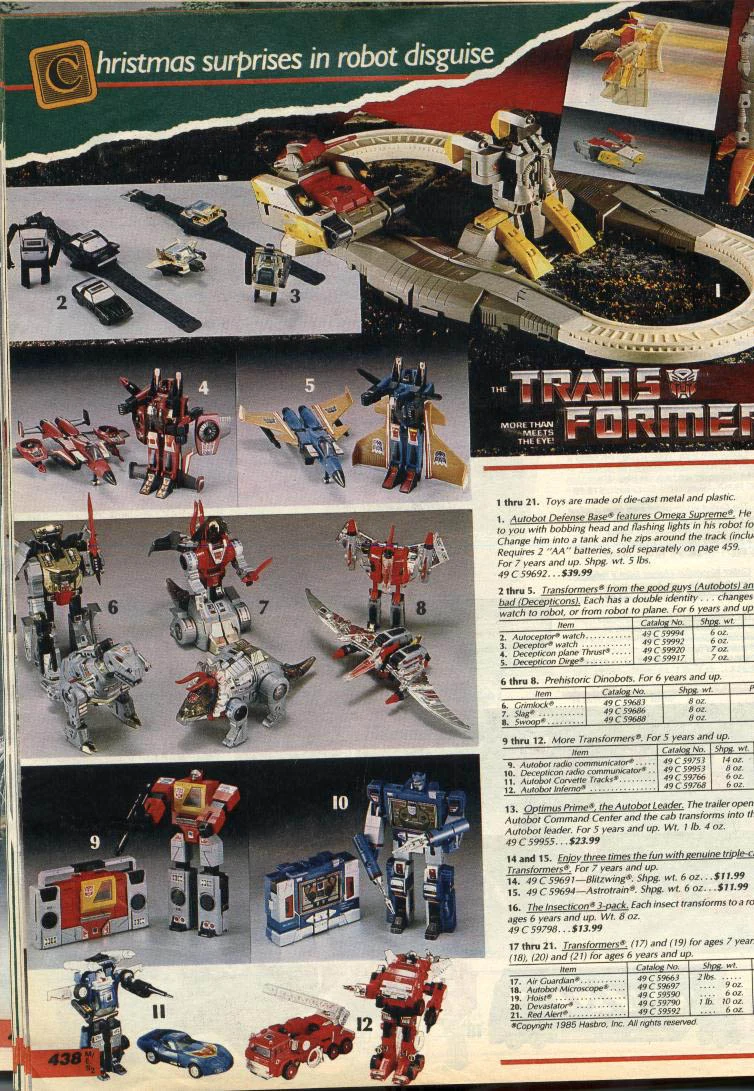
The Transformers page works differently. It crowds its robots, vehicles and accessories into numbered groups, then answers the bright pictures with compact descriptions and prices. A toy is simultaneously a character and an orderable item. The eye can travel between those identities: first the promise of transformation, then the practical task of finding the matching entry.
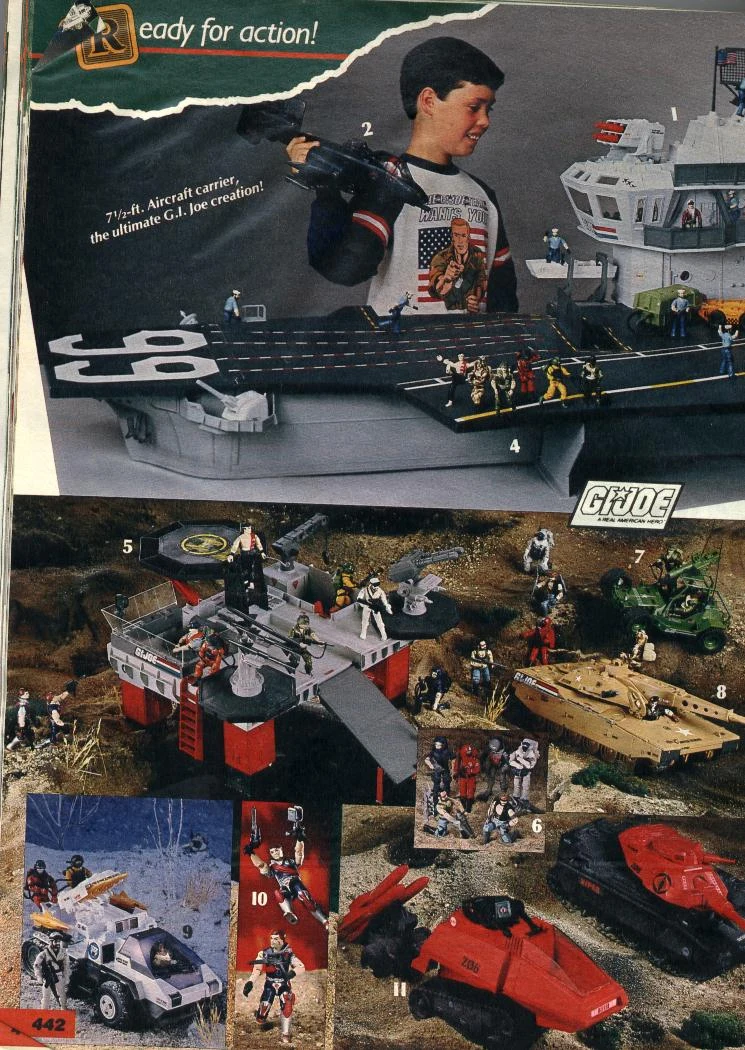
The G.I. Joe aircraft-carrier photograph adds a child to the scene. Suddenly size is no longer an abstract measurement. The toy takes up real territory beside a real person. Below it, smaller vehicles occupy their own miniature landscapes. These photographs make different promises about space: a bedroom floor might accommodate one adventure, while another seems to ask for the whole room.
For a present-day reader, the practical details can be as revealing as the hero photograph. Age ranges, battery requirements, dimensions and separate accessories explain what the purchase actually included. A catalog price belongs to that specific offer and moment; it is not a modern appraisal. Reading the listing carefully restores the shopping decision underneath the nostalgia.
The part you already owned
The 1983 Sears Wish Book offers another revealing arrangement. Its printed page 509 places LEGO Space above Town, with product descriptions gathered below. A moon landscape shares the paper with a fire station, a police station and a street under construction. Different futures are close enough to compare without turning the page. The book becomes a map of possible afternoons.
Not every household ordered from Sears, and not every circled item arrived. That is part of the story, too. The pleasure of browsing did not erase price, availability or a family’s limits. A remembered wish can carry disappointment alongside delight. Giving both feelings room makes the old catalog more human than a simple parade of things everybody supposedly owned.
What remains especially appealing is the interval before the answer. A toy could be chosen, reconsidered, ranked against another, and imagined in action. The catalog supplied the photograph; the reader supplied the movement. Long before the package reached the house, the adventure had somewhere to begin.